


If I Keep the Sabbath, How Will I Get Everything Done?
Scripture — Mark 2:23-27 (NRSV)
One sabbath he was going through the grainfields; and as they made their way his disciples began to pluck heads of grain. The Pharisees said to him, “Look, why are they doing what is not lawful on the sabbath?” And he said to them, “Have you never read what David did when he and his companions were hungry and in need of food? He entered the house of God, when Abiathar was high priest, and ate the bread of the Presence, which it is not lawful for any but the priests to eat, and he gave some to his companions.” Then he said to them, “The sabbath was made for humankind, and not humankind for the sabbath; so the Son of Man is lord even of the sabbath.”
Focus
The primary purpose of the Sabbath isn’t improved productivity. If we rest only or mainly so that we can do better and more work, we’re missing the spirit of the Sabbath. God has given us the gift of Sabbath so that we live fuller, richer, and healthier lives. In the rest of Sabbath, we devote time to enjoying God’s presence as well as the presence of family and friends. We step back to see our lives from a fresh perspective, with bodies rested and minds renewed.
This devotion is part of the series: Following Jesus in the Gospel of Mark.
Devotion
When I was pastor of Irvine Presbyterian Church, I preached a sermon series on the Sabbath. I did so because I saw that so many of the people in my church – including me – were not accepting God’s gift of a day of rest. We were working day after day, without much of a break, let alone a day a week of rest.
As I explored with my congregation the biblical teachings on the Sabbath, I was often asked something like this, “Won’t keeping the Sabbath make me less productive?” Folks would go on to explain that they couldn’t get done all that was expected of them in seven days. How in the world would they manage their workload in six days? The loss of productivity would be costly, perhaps even costing them their jobs.
I empathized with the people asking that question, partly because I was asking it myself. How could I do all that was required of me as a pastor, not to mention a husband, a father, and an adjunct professor, if I took a full day away from work? What would happen if I became less productive in the most important roles of my life?
In the years since I preached that series on the Sabbath, I’ve paid attention to a wide variety of books, articles, and scientific studies that show a surprising correlation between rest and productivity. Let me note three examples.
In an article published in the Harvard Business Review, Leslie A. Perlow and Jessica L. Porter show that top business consultants, who generally work a zillion hours, can indeed “meet the highest standards of service and still have planned, uninterrupted time off.” “Making Time Off Predictable – and Required,” demonstrates that those who take time off actually do better work because they are rested and refreshed.
An article in Scientific American explained, “Why Your Brain Needs More Downtime.” The article’s writer, Ferris Jabr, notes,
Downtime replenishes the brain’s stores of attention and motivation, encourages productivity and creativity, and is essential to both achieve our highest levels of performance and simply form stable memories in everyday life. A wandering mind unsticks us in time so that we can learn from the past and plan for the future. Moments of respite may even be necessary to keep one’s moral compass in working order and maintain a sense of self.
Our brains, according to scientific research, need extended times of rest in order to function effectively and efficiently.
Finally, in “Relax! You’ll be More Productive,” writer for the New York Times, Tony Schwartz, observes,
More and more of us find ourselves unable to juggle overwhelming demands and maintain a seemingly unsustainable pace. Paradoxically, the best way to get more done may be to spend more time doing less. A new and growing body of multidisciplinary research shows that strategic renewal — including daytime workouts, short afternoon naps, longer sleep hours, more time away from the office and longer, more frequent vacations — boosts productivity, job performance and, of course, health.
Why does rest help us to be more productive? According to Schwartz, “The importance of restoration is rooted in our physiology. Human beings aren’t designed to expend energy continuously. Rather, we’re meant to pulse between spending and recovering energy.”
To be clear, none of the articles I just mentioned argues for the efficacy of Sabbath-keeping per se. They focus more broadly on rest, restoration, and recreation. But they certainly speak to the concern of those who fear that taking time for rest will mean a loss of productivity. What a well-rested person produces seems, in fact, to exceed in quality if not quantity what a harried, tired, over-worked person produces.
Having said this, I want to be doubly clear that the primary purpose of the Sabbath isn’t improved productivity. If we rest only or mainly so that we can do better and more work, we’re missing the spirit of the Sabbath. God has given us the gift of Sabbath so that we live fuller, richer, and healthier lives. In the rest of Sabbath, we devote time to enjoying God’s presence as well as the presence of family and friends. We step back to see our lives from a fresh perspective, with bodies rested and minds renewed.
Reflect
Are you hesitant to experiment with Sabbath keeping because you’re afraid your productivity will decrease?
Can you imagine a life in which you were able to take one full day off from work?
What do you think about the studies that correlate rest with productivity? Have you ever experienced something like this in your own life and work?
Act
If you have established Sabbath practices, that’s great. If not, perhaps you might experiment with something that enables you to rest in body, mind, and soul.
Pray
Gracious God, scientific studies show that our brains need regular periods of rest in order to operate a maximum effectiveness. Indeed, you have made us this way! You built into our DNA the need for regular, intentional rest. Then, you gave us the gift of Sabbath so that we might get the rest we need.
Help us, Lord, to follow your lead, to accept your gift, and to learn how to rest. May we do so, not merely to be more productive, but mainly to be more holy and more whole. Amen.
Find all Life for Leaders devotions here. Explore what the Bible has to say about work at the unique website of our partners, the Theology of Work Project’s online commentary. Reflection on today’s Life for Leaders theme can be found here: Created to Rest: Entering Into Joyful Communion With God.
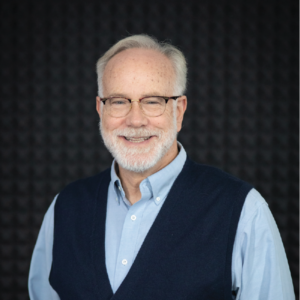
Mark D. Roberts
Senior Fellow
Dr. Mark D. Roberts is a Senior Fellow for Fuller’s Max De Pree Center for Leadership, where he focuses on the spiritual development and thriving of leaders. He is the principal writer of the daily devotional, Life for Leaders, and t...