


Human Flourishing Around the World
My mother grew up in a small rural village called Scott’s Pass, Clarendon, Jamaica. It is a beautiful place, full of beautiful people.
Some of my earliest childhood memories are of visiting family and friends in Scott’s Pass. My maternal grandparents lived in the village during the early years of my childhood, and our family still owns the small home that my mother and uncles were raised in. I recall the smell of the oil lamp at grandma’s house; it was the only light source available on nights as dark as any I have ever seen. I remember the generous faces of the Elders of my Village. I remember their hearty laughs, and their strong embraces. I also remember the tears we would all share as our family left to return home to the “Promised Land”–The United States of America.
Life in Scott’s Pass always seemed quite different than life in the developed world. Things move much more slowly. People, time, and even the animals seem to take slow, heavy steps. It is as if the whole of the village believes that this is their lot in life—that they have been born into a caste-like system that holds very little opportunity, if any.
Throughout my life I have stayed in contact with many of my friends and family in Scott’s Pass and the surrounding area. I’ve watched my childhood friends work tirelessly over decades to barely scrape by and put food on the table for their families. One of my very best friends in Scott’s Pass slowly built his home over 2 decades, one room at a time, using money he saved from selling small Ziplock bags of cashews at the local market. I know that underneath the heavy burden that my village carries, there is a deep strength and passion for a better life.
What are your reflections on your own community of origin, and the people and institutions that shaped your identity?
I have often wondered what the definition of the word “flourishing” is to a whole community that lives in extreme poverty, in the middle of nowhere, where there seems to be little to no real opportunity to escape that cycle. What promises can a parent make to their children of a better life without risking their integrity and their credibility? I think of my own children, and I wonder what it would be like to feel certain that they would be caught in the same cycle of generational and communal poverty. And their children. And their children’s children. The thought is staggering. It is humbling.
I have often wondered what the definition of the word “flourishing” is to a whole community that lives in extreme poverty, in the middle of nowhere, where there seems to be little to no real opportunity to escape that cycle.
Growing up in the United States, I was raised with a deep understanding of both domestic and global poverty. My personal understanding of economic injustice was deeply shaped from my earliest years of interactions with my extended family on both sides, but it was especially formative to interact with my Jamaican relatives.
In June 2010, on the flight home from a solo trip to Scott’s Pass, I wrote a white paper entitled “A Vision for my Village” that outlined the brilliance and resilience of the people of Scott’s Pass. I did not know it at the time I wrote it, but that paper represented my initial framework for what is currently known as “human flourishing.” It was both aspirational and pragmatic.
The Emergence of Human Flourishing
“The thief comes only to steal and kill and destroy; I have come that they may have life and have it to the full.” John 10:10
What is your framework for or definition of what Jesus means by “life to the full?”
I correlate these words of Jesus in John 10:10 to an emerging field of study: human flourishing. The concept of human flourishing has gained global attention over the past few years, and much of that interest is attributed to the 2016 launch of Harvard University’s Human Flourishing Program at the Harvard Institute for Quantitative Social Science (IQSS). This program launched its groundbreaking flourishing perspective and measures in 2017. Shortly thereafter, a flurry of follow-on activity followed from within academia, as well as from various institutions that had been researching related topics.
While the Harvard model was still emerging, I delivered a keynote speech on the topic “Flourishing Leaders” at the 2017 Common Good National Conference, Churches for the Common Good. When I delivered that keynote, I was unaware of the recently launched Harvard program and its research.
In hindsight I realize that I was walking a parallel path without broader inputs and context. Once I became aware of the movement I quickly read everything that I could get my hands on to get caught up. It was fascinating. The data and analysis were robust. They were also somewhat dissonant from my own research and life experiences. I wondered to myself, “Could communities ensnared by oppressive poverty experience human flourishing as described by the Harvard flourishing measures?”
I wondered to myself, “Could communities ensnared by oppressive poverty experience human flourishing as described by the Harvard flourishing measures?”
As I delved deeper into the findings, I noticed that I was not alone in these thoughts and feelings. A chorus of global voices began to add nuance and critical perspectives to the dialogue. A broad critique of Harvard’s initial research activities and measures posited that the Harvard program was not inclusive of global (non-western) realities. Some of these critiques centered on an east/west dichotomy and argued that western-centric thoughts and frameworks were not easily transferrable to non-western contexts, and therefore less salient to non-western cultures and societies. Harvard listened to this critique and evolved their program over the next several years by formally engaging a diverse global group of researchers, educators, and practitioners.
My Village and Harvard University
In 2021 Harvard launched its $43M Global Flourishing Study (GFS) in collaboration with Gallup, Baylor University, and John Templeton Foundation. The GFS was a planned five-year longitudinal study involving ~240,000 participants from 22 nations. The announced launch signaled that a more globally inclusive data set would be gathered, analyzed, and ultimately shared with the world.
The launch of the GFS also signaled a recognition of and response to perceived weaknesses and limitations of the original research model and sought to correct historic under-representation of non-western research participants as explained through the lens of “WEIRD bias” (Western, Educated, Industrialized, Rich, and Democratic). The inclusion of these additional nations promised to deliver a globally expanded and contextually nuanced set of human flourishing results.
Many of us closely researching this subject assumed that the new study would expose assumed correlations, such as a correlation between financial poverty and lower human flourishing scores. In April 2025, the initial results of the global study were released for a waiting world to consume and digest. The findings were broken into six primary categories: health, happiness, meaning, character, relationships and financial security. These six categories can also be described using the following language of “well-being”: physical well-being (health), emotional well-being (happiness), cognitive well-being (meaning), volitional well-being (character), social well-being (relationships), and material well-being (financial security). The findings included both a restatement of existing knowledge as well as some pleasant surprises.
For me personally, one of the beautiful surprises arose from the nation of Nigeria, a nation of which I am a proud diasporan. Nigeria beat the USA in its overall score, as did Indonesia and Mexico. I was shocked! In 2022, Nigeria had a multidimensional poverty rate of over 63% according to the (Nigerian) National Bureau of Statistics. Still, the Global Flourishing Study proved that Nigerian people are experiencing human flourishing in a beautiful display of resiliency. Even in the face of significant financial poverty, Dr. Victor Counted noted that other factors can be attributed to Nigeria’s flourishing score, such as National health metrics: “Nigeria stands out with less than one-fifth of participants reporting that they had health problems.” Clearly financial stability and security are not the ultimate determinants of what it means to experience life to the full.
Reading about Nigeria, my mind immediately raced back to Scott’s Pass. I was immediately convicted that I need to put on different lenses to discover and discern what flourishing might look like in communities with challenging economics and less access to many of the “comforts” available in industrialized societies. A related question followed very closely: What could I point to in my own vocation as an investor that would bear witness to the same human resiliency?
Where the Rubber Hits my Road: Investing for Human Flourishing
My professional identity is both eclectic and diverse. I facilitate premarital counseling and officiate weddings. I am a regular public speaker and lecturer each year at Stanford University. As of March 2024, I am a published author. I serve on boards, advise Executives, and work on so many other fractional activities that are pieces of my vocational life.
But in the center of it all, I am an institutional investor. I have raised tens of millions of dollars and made dozens of investments in tech startups. This is my primary vocational identity. This is what I do with the majority of my “work life,” my vocation. It is in this area that I must ask myself some of the hardest questions. I love Scott’s Pass, and I love Nigeria, but I live in Atlanta. I love officiating weddings and writing books, but those are a tiny fraction of how I spend my time. I invest.
As I think of my business partner Keith, our attorneys and other service providers, the broad constellation of relationships I navigate daily, and even the global ecosystem that I am blessed to be part of, I wonder how our investment thesis and the way we conduct our business either accelerate or block the flourishing of the people and communities that we are woven into. While we have been intentional in framing and building our VC Firm through the lenses of human flourishing, I am convinced that this is still a long journey of continuous improvement. There will always be new lenses emerging and new opportunities to evolve and adapt.
What about you? How can your vocational leadership grow and change as new ways of seeing your people and your world emerge?
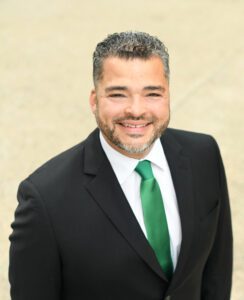
Dr. Chris Brooks
Author
Dr. Chris Brooks is a leading investor and influential voice in global venture capital, serving as Co-Founder and Managing Partner of Clarendon Capital Ventures. Founded in 2024, Clarendon Capital Ventures targets high-impact investment opportunities across Africa and within African diaspora c...