


All Hallows’ Eve
Scripture — Luke 6:20-31 (NRSV)
Jesus looked up at his disciples and said:
“Blessed are you who are poor,
for yours is the kingdom of God.
“Blessed are you who are hungry now,
for you will be filled.
“Blessed are you who weep now,
for you will laugh.
“Blessed are you when people hate you, and when they exclude you, revile you, and defame you on account of the Son of Man. Rejoice in that day and leap for joy, for surely your reward is great in heaven; for that is what their ancestors did to the prophets.”
“But woe to you who are rich,
for you have received your consolation.
“Woe to you who are full now,
for you will be hungry.
“Woe to you who are laughing now,
for you will mourn and weep.
“Woe to you when all speak well of you, for that is what their ancestors did to the false prophets.
“But I say to you that listen, Love your enemies, do good to those who hate you, bless those who curse you, pray for those who abuse you. If anyone strikes you on the cheek, offer the other also; and from anyone who takes away your coat do not withhold even your shirt. Give to everyone who begs from you; and if anyone takes away your goods, do not ask for them again. Do to others as you would have them do to you.”
Focus
Why did the lectionary compilers want to remind us on All Hallows of what it means to grow into blessed people and what it means to grow into cursed people?
Because, I think, this feast day reminds us that those decisions have eternal stakes.
Devotion
If the question “Why this passage today?” could be asked of yesterday’s Scripture reading, it can even more be asked of today’s. What in the world do the Beatitudes have to do with the eve of All Saints’ Day?
You probably, of course, know this day by another name: Halloween. That name comes, ultimately (evident in its older spelling, Hallowe’en or Hallow-even), from this day’s place as the eve of All Saints’—as one older term has it, All Hallows.
The beginning of Christian festivals on their eves was a concept which the early church carried over from Jewish practice, where the Sabbath began at sundown, and of course we now think of Christmas Eve as the beginning of Christmas without batting an eye. But this day’s connection to tomorrow is more buried now. There are a lot of reasons folks have forgotten about the day’s Christian connections, and a lot of efforts—some simply excessive commercialization, some intentional pagan spiritual practices—to keep the connection buried. But it’s there.
That link in the preceding paragraph is a link to a blog post which I wrote in 2021 as we were all emerging from the pandemic—about the ways in which I saw, that Halloween, people’s tentative reaching for community. It’s hard to excerpt, but here’s a taste, as I describe offering candy to trick-or-treaters:
Nobody screamed. Nobody got mad. Nobody had a pandemic meltdown. Most people said thank you. A few kids took large handfuls unprompted, but most kids and adults approached warily. “Just take one,” the parents and other adults would say.
“No, really,” I kept saying, “they can take a handful. We have lots of candy.”
Timidly they would take another couple of pieces.
After a while this began to remind me of something I often do – handing people Eucharistic bread, which I always offer in large handfuls and they take in tiny bits. Although wafers mitigate this somewhat because everyone gets the same amount, the overwhelming impression I still get when people come and take bread and wine is that they are scared of it. . . .
Here is abundance. Take a handful. But we are scared. So scared, so traumatized, so terrified at the best of times, let alone after so much pandemic has taken so much from all of us. At this particular thin place we meet so many things, but one of them is the horror that, as Beetlejuice reminds us [a reference to a song I’d referred to earlier in the post, “The Whole ‘Being Dead’ Thing”], no one gets out of this alive. We can, if we dare, transcend the horror, but it is not easy to dare.
And here’s where I want to come back to the Beatitudes. Why did the lectionary compilers want to remind us on All Hallows of what it means to grow into blessed people and what it means to grow into cursed people?
Because, I think, this feast day reminds us that those decisions have eternal stakes. No one, in fact, gets out of this life alive. Except one person—the Son of Man. And when we are poor, hungry, sad, traumatized, and scared, he tells us that he will be with us, and there is a place for us—with him—with so many saints who have already walked this long road. Here, on All Hallows’ Eve, the curtain is very thin, and we can see them waiting for us, and the table is abundantly spread.
Reflect
What are you afraid of?
How are you blessed?
Act
I can’t shake the feeling that I’ve used this version of “For All the Saints”—the great hymn of this day since the mid-19th century—before. But it so beautifully pictures ordinary people called to be saints that I’m using it again. Watch, listen, and trust Jesus.
Pray
(Prayer for All Saints’ Day in the Book of Common Prayer) Almighty God, you have knit together your elect in one communion and fellowship in the mystical body of your Son Christ our Lord: Give us grace so to follow your blessed saints in all virtuous and godly living, that we may come to those ineffable joys that you have prepared for those who truly love you; through Jesus Christ our Lord, who with you and the Holy Spirit lives and reigns, one God, in glory everlasting. Amen.
Find all Life for Leaders devotions here. Explore what the Bible has to say about work at the High Calling archive, hosted by the unique website of our partners, the Theology of Work Project. Reflection on today’s Life for Leaders theme can be found here: What Helps Us Be Open to God?.
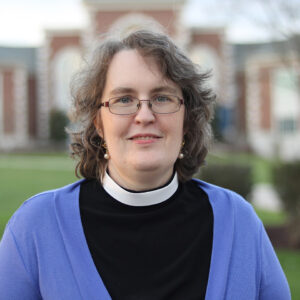
Jennifer Woodruff Tait
Editorial Coordinator
Jennifer Woodruff Tait (PhD, Duke University; MSLIS, University of Illinois; MDiv/MA Asbury Theological Seminary) is the copyeditor of and frequent contributor to Life for Leaders. She is also senior editor of