


Attentiveness to the Creator and Creation, Part 2
Scripture — Matthew 6:26,28b-29 (NRSV)
Look at the birds of the air: they neither sow nor reap nor gather into barns, and yet your heavenly Father feeds them. Are you not of more value than they? . . . Consider the lilies of the field, how they grow; they neither toil nor spin; yet I tell you, even Solomon in all his glory was not arrayed like one of these.
Focus
God calls us to pay attention to creation – what we often refer to as “nature”. Doing so not only helps us better know and thus serve God’s purposes, but also can be a vehicle by which we grow to a deeper understanding of God’s character and a deeper experience of peace.
Devotion
If you’ve read my earlier devotions in 2025, you may have noticed themes in Jesus’ famous Sermon on the Mount (Matthew 5-7) running through them, often explicitly. Although I didn’t quote from the Sermon on the Mount in yesterday’s devotion, it was a big part of what motivated and informed that devotion.
I spent much of 2024 writing a book about why attentiveness to creation is important. Although my publisher Ned Bustard eventually picked the title Birds in the Sky, Fish in the Sea drawn from Psalm 8:8, with the subtitle Attending to Creation with Delight and Wonder, my original working title was Consider the Lilies from Matthew 6:28. For the record, I think Ned’s title is much better for several reasons. Yet Jesus’ instruction to “consider the lilies” is worth considering (even if not as a book title). As David told us in Psalm 19, “The heavens are telling the glory of God”; creation continues to “pour forth speech,” revealing knowledge of the creator.
In yesterday’s devotion, we considered how God had a plan and purpose for creation, and that the ways we live and interact with creation ought to be in keeping with that purpose. If I were to walk into my home kitchen and find some baked item cooling on the counter, I should find out its purpose before presumptuously cutting into it (as a way to honor whoever made it or left it there, which was most likely my wife). In the same way, we should also seek to understand God’s plan and purpose for creation before presumptuously “consuming” it. That is how we honor and worship God as Creator.
Scripture has some pointers to help get us started as we explore what God had in mind for his created world. We considered a few of these yesterday. A big part of God’s plan, for example, is for all of creation to flourish and be fruitful. That is a sort of overview. To understand that purpose more fully, and to understand how we can help creation to flourish, we should be in the practice of paying attention to it.
When we read of Jesus telling his followers to “look at the birds of the air” and “consider the lilies”, it is easy to jump to the moral lesson: “don’t worry about your tomorrow” (v.34). But we would also do well to obey just the simple commands to pay attention to the birds and the flowers. The word translated to “consider” in verse 28 is a Greek word that implies careful consideration. It is not something to do lightly or just skip over so that we can get to the next point.
Just as it takes time, effort, and attentiveness to learn from God’s revelation through Scripture, learning from creation also takes time and effort. But it’s something we all can do. A starting point is just to do what Jesus told his followers to do. Pay attention to the birds. Also, pay attention to the flowers. Even the dandelions. We might also add trees and turtles, fish and foxes, and the little bees pollinating the flowers that we might not even notice without effort. Some of us might do that on a walk in a nearby city park, and by spending some time on a park bench. For others it might mean sitting by a pond or river and watching the ducks.
A wonderful thing is that doing this can actually improve your health. Studies have shown that time in green spaces and time listening to birdsong both relieve stress and anxiety. Maybe that is one of the purposes for which God made birds to sing – which is such an extravagant part of creation! It certainly seems to be some of the wisdom that David imparts in Psalm 23 when he speaks of God restoring our souls by leading us to green pastures and quiet waters. Even as we can both learn from and delight in God’s written word, so too can attending to creation also bring us delight as well as deeper knowledge of the Creator.
Reflect
When have you spent time in nature – in an environment that reveals not only human handiwork but also the handiwork of God such as trees, flowers, or birds? How has it impacted you? Have you experienced God restoring your soul through green pastures or quiet waters?
Act
Spend some time paying attention this week to something God created. It can be a bird in the sky, a fish in the sea (or lake or river), a flower in your lawn, or a tree in the city park. Take note of what you see that points to God’s creativity.
Pray
(Inspired by Psalm 8)
O Lord, you are truly majestic. You have set your glory above the heavens. The moon and the stars are the work of your fingers. You made both the domestic sheep and cattle that give us wool and milk, as well as the wild birds in the sky whose songs and colors give us delight, and the creatures of the wild places and the depths of the sea. And you have honored us, your children, with the task of caring for your creation. Help us to do that in a way that honors you and brings glory to you as we help your creation to flourish. Amen.
Find all Life for Leaders devotions here. Explore what the Bible has to say about work at the unique website of our partners, the Theology of Work Project’s online commentary. Reflection on today’s Life for Leaders theme can be found here: Store Your Treasure in Heaven, Not on Earth (Matthew 6:19-34).
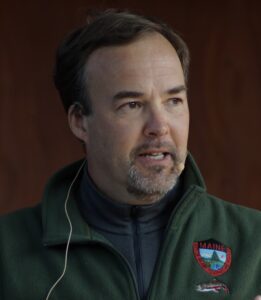
Matthew Dickerson
Author
Matthew Dickerson’s books include works of spiritual theology and Christian apologetics as well as historical fiction, fantasy literature, explorations of the writings of C.S. Lewis and J.R.R. Tolkien, and books about trout fishing, fly fishing, rivers, and ecology. His recent book,