


Flourishing and Fruitfulness
Scripture — Psalm 92:12-15 (NIV)
The righteous will flourish like a palm tree,
they will grow like a cedar of Lebanon;
planted in the house of the LORD,
they will flourish in the courts of our God.
They will still bear fruit in old age,
they will stay fresh and green,
proclaiming, “The LORD is upright;
he is my Rock, and there is no wickedness in him.”
Focus
Scripture makes it clear that human flourishing includes fruitfulness. We see this in Genesis 1, Psalm 92, and John 15. We will be fruitful when we are connected to God, which can be pictured either as trees planted in the temple or as branches on the vine of Jesus. The more our relationship with God is deep and strong, the more we will flourish in life, bearing much fruit that glorifies God.
This devotion is part of the series: Biblical Wisdom for Flourishing
Devotion
In the first devotion of the Biblical Wisdom for Flourishing series, I quoted Tyler VanderWeele, director of the Harvard Human Flourishing Program, who defines flourishing in this way:
Flourishing itself might be understood as a state in which all aspects of a person’s life are good. We might also refer to such a state as complete human well-being, . . . I would argue that, regardless of the particulars of different understandings, most would concur that flourishing, however conceived, would, at the very least, require doing or being well in the following five broad domains of human life: (i) happiness and life satisfaction; (ii) health, both mental and physical; (iii) meaning and purpose; (iv) character and virtue; and (v) close social relationships.
While agreeing with VanderWeele’s definition, I mentioned that flourishing in the Bible includes a strong element of fruitfulness. We see this, for example, in Psalm 92:12-14:
The righteous will flourish like a palm tree,
they will grow like a cedar of Lebanon;
planted in the house of the LORD,
they will flourish in the courts of our God.
They will still bear fruit in old age,
they will stay fresh and green (emphasis added).
In Scripture, fruitfulness is essential to human flourishing. This comes as no surprise, since fruitfulness is also essential to our identity as human beings. We see this in Genesis 1. There, God creates heaven, earth, and all that is in them, including humanity. God makes human beings as unique bearers of God’s own image and gives us the responsibility of completing the good work God began in creation. Specifically, God says to the first humans, “Be fruitful and multiply, and fill the earth and subdue it” (Gen 1:28). Notice that the very first command of God to humankind is “Be fruitful.” Fruitfulness is essential to our human nature and divine calling. In Genesis 1, fruitfulness has to do in particular with making more people, but it suggests much more than this. (See, for example, Gen 2:15; Jer 17:7-8; Ps 92:14. See also Tom Nelson, Why Your Work Matters: How God Uses Our Everyday Vocations to Transform Us, Our Neighbors, and the World, pp. 12-16.)
Not only are we created for fruitfulness, but we are also saved for a life of abundant fruitfulness. No passage in Scripture makes this truth more evident than John 15, where Jesus says,
“I am the true vine, and my Father is the vinegrower. He removes every branch in me that bears no fruit. Every branch that bears fruit he prunes to make it bear more fruit. . . . Abide in me as I abide in you. Just as the branch cannot bear fruit by itself unless it abides in the vine, neither can you unless you abide in me. I am the vine, you are the branches. Those who abide in me and I in them bear much fruit, because apart from me you can do nothing. . . . My Father is glorified by this, that you bear much fruit and become my disciples” (John 15:1-2, 4-5, 8).
When we have faith in Jesus, we become connected to him as branches to a vine. As a result, we bear fruit.
Notice a couple of key truths about our fruitfulness. First, it is not primarily a matter of our human effort, but rather of abiding in Jesus. Abiding in John 15 is quite similar to what we saw in Psalm 92, where the key to flourishing is being like a tree planted in the temple. That imagery shows that flourishing is a result of having a deep relational connection with God. This can be portrayed as a tree growing in the soil or as a branch connected to a vine.
Second, when we bear fruit, God is glorified. Our fruitfulness isn’t primarily a matter of expressing or enriching ourselves. Rather, we bear fruit for God’s purposes and glory. This, of course, fits perfectly with what we learned from Genesis. When we are fruitful, we honor the God who made us to bear fruit and told us to do so. In Psalm 92, when we flourish by bearing fruit, we don’t celebrate our effort. We don’t say, “Oh, I am so awesome.” Rather, we proclaim, “The LORD is upright; he is my Rock, and there is no wickedness in him” (92:15).
To sum up, Scripture makes it clear that human flourishing includes fruitfulness. We see this in Genesis 1, Psalm 92, and John 15. We will be fruitful when we are connected to God, which can be pictured either as trees planted in the temple or as branches on the vine of Jesus. The more our relationship with God is deep and strong, the more we will flourish in life, bearing much fruit that glorifies God.
Reflect
In what ways is your life fruitful?
Do you think of your fruitfulness as glorifying God? If so, why? If not, why not?
What helps you to be deeply connected with God?
Act
Set aside some time to reflect on your fruitfulness in life. As you identify your “fruit,” pause to give thanks to God for enabling you to be fruitful in this way.
Pray
Gracious God, thank you for creating us and saving us so that we might be fruitful in life. Thank you for helping us to be truly and deeply connected to you, the spring of all life, the source of our fruitfulness.
Help me, Lord, to be like a tree planted in the temple or a branch grafted into the vine of Christ. May I continue to grow in relationship with you so that I might flourish. May your life flow through me so that I am fruitful in ways that honor and glorify you. Amen.
Find all Life for Leaders devotions here. Explore what the Bible has to say about work at the unique website of our partners, the Theology of Work Project. Reflection on today’s Life for Leaders theme can be found here: I Am the Vine and You Are the Branches (John 15).
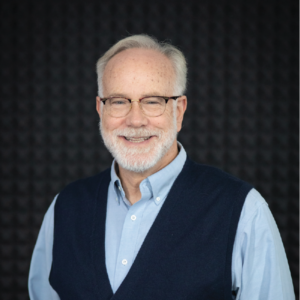
Mark D. Roberts
Senior Fellow
Dr. Mark D. Roberts is a Senior Fellow for Fuller’s Max De Pree Center for Leadership, where he focuses on the spiritual development and thriving of leaders. He is the principal writer of the daily devotional, Life for Leaders, and t...