


I See The Heavens Opened
Scripture — Acts 7:55-60 (NRSV)
Filled with the Holy Spirit, Stephen gazed into heaven and saw the glory of God and Jesus standing at the right hand of God. “Look,” he said, “I see the heavens opened and the Son of Man standing at the right hand of God!” But they covered their ears, and with a loud shout all rushed together against him. Then they dragged him out of the city and began to stone him; and the witnesses laid their coats at the feet of a young man named Saul. While they were stoning Stephen, he prayed, “Lord Jesus, receive my spirit.” Then he knelt down and cried out in a loud voice, “Lord, do not hold this sin against them.” When he had said this, he died.
Focus
We can get so excited to get to the end of Saul’s story that I think we can miss its similarities with Stephen’s story.
Devotion
This coming Sunday is the Fifth Sunday of Easter. (Again, if you’re interested in why the lectionary provides readings from Acts during the Easter season instead of Old Testament readings, check out my devotionals from 2021 and 2023). And I’ve been writing devotions at Life for Leaders long enough that this particular passage has come up before, in 2020 while we were all undergoing the unexpected liturgical season my bishop dubbed “COVIDtide.” Here’s what I wrote about it then, where you can learn more about the story of Stephen, the first martyr for Christ. Interestingly, though many of the Acts passages read during Easter focus on the sermons preached as the Christian faith spread (all of which follow a very specific pattern which you can read about here), this passage tells us the tragic events that happened just after Stephen preached his sermon.
One of the fascinating things in this story—and the one that most interests me today—is the presence of Saul, whom we know better as Paul, in the story. He keeps guard over the coats of those who stone Stephen, and in the very next verse, we hear that he is not merely an innocent bystander: “And Saul approved of their killing him” (8:1a). In fact, even as Stephen’s burial is being conducted, Saul launches a campaign of persecution:
That day a severe persecution began against the church in Jerusalem, and all except the apostles were scattered throughout the countryside of Judea and Samaria. Devout men buried Stephen and made loud lamentation over him. But Saul was ravaging the church by entering house after house; dragging off both men and women, he committed them to prison. Now those who were scattered went from place to place proclaiming the word (8:1b-4).
The proclamation of the word both in the countryside and in Jerusalem leads to several important conversions—pretty much the entire population of the city of Samaria (8:5-8) including Simon Magus (8:9-24, although he gets off to a bit of a bumpy start), and then the Ethiopian eunuch (8:26-39) and people in towns all the way to Caesarea (8:40). Meanwhile Saul, unaware that all the real action is occurring somewhere else, is seeking to persecute the believers in Damascus (9:1-2).
And then the heavens open again.
This had been Stephen’s final vision: “‘Look,’ he said, ‘I see the heavens opened and the Son of Man standing at the right hand of God!’” (7:56). We are not told whether those who stoned Stephen saw this vision too but I personally kind of think they did (otherwise why did they cover their ears?)
And this is the vision that comes to Saul. We all know the story—the light from heaven, the voice of the Lord, Saul struck blind, the courage of Ananias to pray for Saul and incorporate him into the community of Jesus-followers (9:3-19), the beginning of his ministry. (By the way, he won’t get the name Paul until 13:9, just before he officially begins his mission to the Gentiles). We can get so excited to get to the end of Saul’s story that I think we can miss its similarities with Stephen’s story. Here is a man who was so unable to recognize what happened the first time the heavens opened in front of him and the Son of Man appeared that . . . God did it again.
When I wrote about this story six years ago I concluded this way:
From all of this I take three things. The first is that we are all called to prayer and service—wherever we are. The second is that we never know what prayer and service may lead us to; it may not look at all like the way we intended to exercise our leadership. The third is that we never know what our prayer and service may do for others, or what God may have in store for us. Even now, even here.
I would add a fourth thing. And that is that we never know the lengths a loving God will go to—_even when we are actively working against God_—to get our attention.
Reflect
How are you called to prayer and service?
How might God be trying to get your attention?
Act
In writing this devotion I learned that there is a hymn written specifically for the Feast of the Conversion of St. Paul called “We Sing the Glorious Conquest,” and I just love the last verse in the light of today’s message:
Lord, teach your Church the lesson,
Still in her darkest hour
Of weakness and of danger,
To trust your hidden power:
Your grace by ways mysterious
The wrath of Earth can bind,
And in Thy boldest rival
Your chosen saint can find.
Here is an arrangement of the hymn and here are lyrics. Contemplate your answers to the questions above as you listen.
Pray
(Prayer for Those Who Suffer for The Sake of Conscience in the Book of Common Prayer)
O God our Father, whose Son forgave his enemies while he was suffering shame and death: Strengthen those who suffer for the sake of conscience; when they are accused, save them from speaking in hate; when they are rejected, save them from bitterness; when they are imprisoned, save them from despair; and to us your servants, give grace to respect their witness and to discern the truth, that our society may be cleansed and strengthened. This we ask for the sake of Jesus Christ, our merciful and righteous Judge. Amen.
Find all Life for Leaders devotions here. Explore what the Bible has to say about work at the unique website of our partners, the Theology of Work Project. Reflection on today’s Life for Leaders theme can be found here: Work and Christian Identity (Acts 8-12).
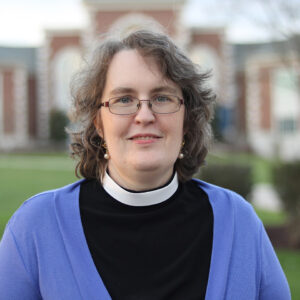
Jennifer Woodruff Tait
Author of Life for Leaders Devotions
Jennifer Woodruff Tait (PhD, Duke University; MSLIS, University of Illinois; MDiv/MA Asbury Theological Seminary) is the copyeditor of and frequent contributor to Life for Leaders. She is also senior editor of