


Oh Lord, It’s Hard to Be Humble
Scripture — Philippians 2:3-8 (CEB)
Don’t do anything for selfish purposes, but with humility think of others as better than yourselves. Instead of each person watching out for their own good, watch out for what is better for others. Adopt the attitude that was in Christ Jesus.
Though he was in the form of God,
he did not consider being equal with God something to exploit.
But he emptied himself
by taking the form of a slave
and by becoming like human beings.
When he found himself in the form of a human,
he humbled himself by becoming obedient to the point of death,
even death on a cross.
Focus
Years ago, country music sensation Mac Davis sang, “Oh Lord, it’s hard to be humble, when you’re perfect in every way.” Though his light-hearted song is ironic, it also points to several truths about humility. Humility, according to Philippians 2, is essential if we’re going to live and lead for the good of others. Scripture repeatedly calls us to be humble. This leads to a question: How can we become truly humble? A starting point is to admit to ourselves and to the Lord that this is hard for us. Davis was right. It is hard to be humble. But that recognition, ironically, helps us to grow in humility.
Today’s devotion is part of the series: Living and Leading for the Good of Others.
Devotion
How’s this for an unusual prayer?
Oh Lord, it’s hard to be humble
When you’re perfect in every way.
I can’t wait to look in the mirror
Cause I get better looking each day.
To know me is to love me
I must be a hell of a man.
Oh Lord It’s hard to be humble,
But I’m doing the best that I can.
If you’ve been around as long as I have, I expect you’ve heard this “prayer” before. Perhaps you’ve even sung along with country music star Mac Davis, who released this song in 1980. It was a solid hit on both Billboard’s Country Singles chart (#10) and Billboard’s Hot 100 chart (#43). Its popularity reflected both a catchy tune and an ironically humorous theme.
Many of us could truly pray the first line of Davis’s song, “Oh Lord, it’s hard to be humble,” though I doubt we’d follow up with the second line, “When you’re perfect in every way.” What Davis means, of course, is “O Lord, it’s hard for me to be humble when I’m perfect in every way.”
Whether we think we’re perfect or not, it can be hard to be humble, right? I know that’s true for me. I expect it’s probably true for you, too. Plus, if you’re convinced that you’re doing great when it comes to humility, that very conviction might indeed reveal a certain lack of humility. Ouch!
Even though it’s hard to be humble, the Bible calls us to that very thing. Philippians 2 says that “with humility” you should “think of others as better than yourselves” (v. 3). In this way, you will “adopt the attitude that was in Christ Jesus” (v. 5), who “humbled himself by becoming obedient to the point of death, even death on a cross” (v. 8). Other passages of Scripture are even more direct. James 4:10 reads, “Humble yourselves before the Lord, and he will exalt you” (NRSV). In Matthew 23:11-12, Jesus says, “The greatest among you will be your servant. All who exalt themselves will be humbled, and all who humble themselves will be exalted.”
So, Scripture repeatedly urges us to be humble. Both the example and the teachings of Jesus commend humility. Therefore, as Christians who seek to follow both our Lord and the Bible, we want to be humble. We want to be like Jesus. We want to obey biblical teaching. But then there’s this nagging problem. In the words of Mac Davis, “Oh Lord, it’s hard to be humble.”
I wonder: How can we become humble? What is the path to genuine humility? Or, perhaps, what are the paths?
In this devotion and in several to follow, I want to work with you on how we can become truly humble. If we’re trying to learn how to live and lead for the good of others, and if humility is a prerequisite for this activity (as seen in Philippians 2), then we need to know how to grow in humility. As you would expect, I plan to work on this issue from a biblical perspective. But I recently found another, rather ironic source of additional wisdom that helps answer the “How can we become truly humble?” question. That source is none other than Mac Davis’s song.
It begins, as you know, with the confession, “Oh Lord, it’s hard to be humble.” So here’s the surprising thing: if you want to be humble, that’s not a bad place to start. Confession, in this case, confession of your struggle with humility, isn’t just good for the soul; it’s also good for becoming humble. This observation isn’t just mine, and it isn’t only a theological observation. Rather, it also reflects recent scholarship on humility.
June Price Tangney, a clinical psychologist and emeritus professor at George Mason University, was one of the first scholars to study humility. An article she published in 2000 laid a solid foundation for future work. In “Humility: Theoretical Perspectives, Empirical Findings and Directions for Future Research,” Tangney began by noting that “Humility is a neglected virtue in the social and psychological sciences” (p. 70). But her work intended to start turning things around. In her groundbreaking article, Tangney explains that many assume that humility “simply means holding oneself in low regard” (p. 71). But this “low self-esteem” notion of humility should be replaced by a more nuanced and accurate understanding. Drawing from “theological, philosophical, and psychological literature,” Tangney shows humility to be “a rich, multifaceted construct” (p. 73). Among the “key elements of humility,” the first, according to Tangney, is an “accurate assessment of one’s abilities and achievements.” Such an assessment is followed by the “ability to acknowledge one’s mistakes, imperfections, gaps in knowledge, and limitations (often vis-à-vis a ‘higher power’)” (p. 74).
Isn’t that what Mac Davis does when singing, “Oh Lord, it’s hard to be humble”? He’s admitting his imperfections and limitations. Now, of course, I realize that Davis was singing such things tongue-in-cheek. But if we take him at face value for a moment, he’s actually beginning at the right starting point by admitting his struggle with humility. Moreover, the fact that he is able to do this shows that, to some extent at least, he gives evidence of having something else essential to humility, namely, an accurate assessment of himself.
I admit I’m squeezing a lot of juice out of Mac Davis’s “orange,” but his song does point to what humility is and how we can experience it. In fact, there is even more wisdom for us in “Lord, It’s Hard to Be Humble,” which I’ll explore in next Monday’s devotion. For now, let me encourage you to reflect honestly on your own humility. And, for fun, you might listen to Davis’s song.
Reflect
Do you find it hard to be humble? If so, why? If not, why not?
As you reflect on your life, whom have you experienced as humble? Why do you think of them as humble? Why do you think they were humble? How did their humility manifest itself?
Do you ever ask the Lord to help you be humble? If so, why? If not, why not?
Act
If you feel so led, go ahead and talk to God about your struggles with humility.
Pray
Gracious God, I’m not going to sing it, but I will say to you, “Oh Lord, it’s hard to be humble.” I admit that’s true, and I don’t even begin to think of myself as perfect in every way. But, even acknowledging my imperfections, I confess that sometimes I think of myself more than others, and hold myself in higher esteem than I deserve.
So, dear Lord, I confess my struggle with humility and ask for your help. I want to be humble in obedience to you. But I also am eager for humility so that I might be free to seek the good for others, that freedom that is a result of genuine humility. So, teach me through your Word and by your Spirit to be humble. As this happens, may you receive all the glory. Amen!
Find all Life for Leaders devotions here. Explore what the Bible has to say about work at the High Calling archive, hosted by the unique website of our partners, the Theology of Work Project. Reflection on today’s Life for Leaders theme can be found here: Shine Like the Stars.
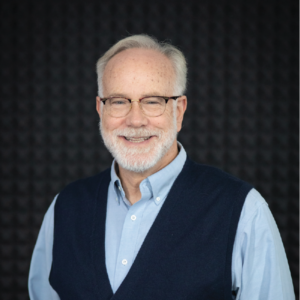
Mark D. Roberts
Senior Fellow
Dr. Mark D. Roberts is a Senior Fellow for Fuller’s Max De Pree Center for Leadership, where he focuses on the spiritual development and thriving of leaders. He is the principal writer of the daily devotional, Life for Leaders, and t...