


Paid It All
Scripture — Luke 23:33-43 (NRSV)
When they came to the place that is called The Skull, they crucified Jesus there with the criminals, one on his right and one on his left. Then Jesus said, “Father, forgive them; for they do not know what they are doing.” And they cast lots to divide his clothing. The people stood by, watching Jesus on the cross; but the leaders scoffed at him, saying, “He saved others; let him save himself if he is the Messiah of God, his chosen one!” The soldiers also mocked him, coming up and offering him sour wine, and saying, “If you are the King of the Jews, save yourself!” There was also an inscription over him, “This is the King of the Jews.”
One of the criminals who were hanged there kept deriding him and saying, “Are you not the Messiah? Save yourself and us!” But the other rebuked him, saying, “Do you not fear God, since you are under the same sentence of condemnation? And we indeed have been condemned justly, for we are getting what we deserve for our deeds, but this man has done nothing wrong.” Then he said, “Jesus, remember me when you come into your kingdom.” He replied, “Truly I tell you, today you will be with me in Paradise.”
Focus
Thinking about Christ as both a divine and a human King makes us ready for a season in which we celebrate Christ’s First Coming—as a tiny, helpless baby born to share our human trials—and his Second Coming—as the cosmic Ruler of the Universe returning in judgement.
Devotion
Yesterday, in preparation for the Feast of Christ the King, we thought about the way Jesus is our king because he rules over all creation and “made it all.” While that was a main emphasis of yesterday’s passage from Colossians, it isn’t the only emphasis in that passage. It’s also clear from Colossians 1—and even clearer from the Gospel reading from Luke for today—that Jesus also is our king because he “paid it all”:
For in him all the fullness of God was pleased to dwell, and through him God was pleased to reconcile to himself all things, whether on earth or in heaven, by making peace through the blood of his cross (Colossians 1:19-20).
The soldiers also mocked him, coming up and offering him sour wine, and saying, “If you are the King of the Jews, save yourself!” There was also an inscription over him, “This is the King of the Jews.”. . .Then [the criminal] said, “Jesus, remember me when you come into your kingdom.” He replied, “Truly I tell you, today you will be with me in Paradise” (Luke 23:36-38, 42-43).
This is, of course, the great tension around Jesus’ kingship, and what makes it different from mere human lordships. On one hand, he created everything that is. On the other hand, he subjected himself to that creation, to our free will, and lived among us as a human being (not simply pretending to be a human being) and let us murder him.
When Christ the King was originally instituted as a feast in 1925, it was intended to occur in October on the last Sunday before All Saints Day, connecting the lordship of Christ to the vast host of the faithful departed who have followed him. In the 1970s, however, the Roman Catholic Church moved the feast to the final Sunday of the church year, as a preparation for Advent; other denominations that observe the feast followed suit. It makes a lot of sense, because thinking about Christ as both a divine and a human King makes us ready for a season in which we celebrate Christ’s First Coming—as a tiny, helpless baby born to share our human trials—and his Second Coming—as the cosmic Ruler of the Universe returning in judgement.
Years ago, when I was in college, I used to go to Wednesday evening chapel, which was a contemplative prayer service. At the very end, the lights in the chapel would be dimmed, and we would sit there in darkness—lit only by candles—singing the Taizé chorus “Jesus, Remember Me.” If you don’t know anything about Taizé, it is an ecumenical religious community in France, and their worship is characterized by simple choruses in many different languages, sung over and over meditatively to help bring the heart to a place of prayer. They encourage other people to use these choruses as well; so there we sat over thirty years ago, atop treelined hills above the Mississippi River, repeating over and over again in the candlelit dark the words that the “good thief” in the passage above says to Jesus: “Jesus, remember me when you come into your kingdom.”
I prayed those words in times of joy and in times of great sorrow. I asked to become part of the kingdom with the enthusiastic faith of someone who had only lived nineteen years on this earth; I did not know, as St. Dismas (the church’s traditional name for the penitent thief) surely did not know either, all of what I was asking and what kind of king I was setting out to serve.
But Jesus paid it all anyway. For St. Dismas. For me. For you. It’s never too late to follow him—now, this coming Advent—into a new kind of kingdom.
Reflect
What does it mean that Jesus paid it all?
What does it mean to you that Jesus paid it all?
Act
Take a few minutes out of your day and sit in contemplation before the Lord who paid it all, meditating on his kingdom. (There are many recordings of “Jesus, Remember Me” on YouTube; I like the visuals of this one.)
Pray
(Prayer for the Sunday closest to November 23 in the Book of Common Prayer) Almighty and everlasting God, whose will it is to restore all things in your well-beloved Son, the King of kings and Lord of lords: Mercifully grant that the peoples of the earth, divided and enslaved by sin, may be freed and brought together under his most gracious rule; who lives and reigns with you and the Holy Spirit, one God, now and for ever. Amen.
Find all Life for Leaders devotions here. Explore what the Bible has to say about work at the unique website of our partners, the Theology of Work Project. Reflection on today’s Life for Leaders theme can be found here: The Passion of Jesus (Luke 22:47-24:53).
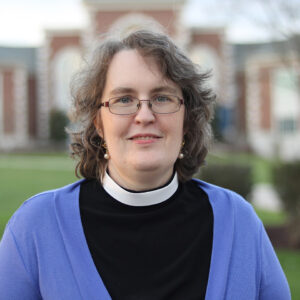
Jennifer Woodruff Tait
Author of Life for Leaders Devotions
Jennifer Woodruff Tait (PhD, Duke University; MSLIS, University of Illinois; MDiv/MA Asbury Theological Seminary) is the copyeditor of and frequent contributor to Life for Leaders. She is also senior editor of
Comments (1)
Beautiful! Thank you, Jennifer.
“Jesus, remember me when you come into Your Kingdom…”