


What Does It Mean to Discern What is Best?
An Invitation from Mark Roberts
Greetings!
I’d like to invite you to one of my favorite events, the Third Third Roundtable. This yearly gathering – meeting this year in Omaha, Nebraska, March 5-7 – focuses on helping people flourish in the third third of life. In particular, the Roundtable encourages and equips church leaders – pastors, elders, lay volunteers, visionaries, and others – in their effort to serve the older adults in their church, one of the fastest growing populations in churches and one that has extraordinary kingdom potential.
I love the Third Third Roundtable, not just because I get to help lead it, but also because I learn so much from others who participate. The speakers are fantastic, and it’s great to know people across the country with a common heart for empowering older adults as fruitful disciples of Jesus Christ. This year, several of us from the De Pree Center will be there. We’d love to meet you!
Plus, before the official Roundtable begins on Thursday afternoon (March 6), there’s an optional half-day workshop called The Essentials. Taught by folks with exceptional experience in third third ministry, The Essentials is excellent for people from churches that are new to this work. If you’re just getting going in third third ministry, I highly recommend The Essentials.
To learn more about the Roundtable and/or to register, visit this web page. If you’re coming, please let me know so I can be sure to meet you ([email protected]).
I hope to see many of you in Omaha!
Mark
Scripture — Philippians 1:9-11 (NIV)
And this is my prayer: that your love may abound more and more in knowledge and depth of insight, so that you may be able to discern what is best and may be pure and blameless for the day of Christ, filled with the fruit of righteousness that comes through Jesus Christ—to the glory and praise of God.
Focus
Discernment, in this passage, has two primary activities. First, there is evaluation or examination. We look closely at whatever lies before us, trying to understand it accurately and truly. The second activity in discernment is proving or approving something. It’s coming to a conclusion based on your examination. Discernment involves saying, “In light of all I’ve discovered, I believe this is what’s going on and this is what we should do.”
This devotion is part of the series: Developing a Discerning Heart.
Devotion
In Philippians 1:9-10, the Apostle Paul prays that the love of the Christians in Philippi would “abound more and more in knowledge and depth of insight, so that you may be able to discern what is best.” In last Wednesday’s Life for Leaders devotion, I explored the relationship of love and knowledge in this passage. Today, I’m wondering what it means to discern what is best.
The Greek verb translated here as “discern” is dokimazō. Looking this verb up in the standard Greek-English lexicon, you find a variety of translation options, including: “to make a critical examination of something, to examine, to draw a conclusion about worth on the basis of testing, to prove, to approve.” The NIV prefers “discern.” Other English translations go with “determine” (NRSV), “decide” (CEB), or “approve” (KJV, ESV). All of these translations point to the use of our thinking capacity to evaluate something so that we might be able to affirm or approve it.
What should we evaluate and approve? The NIV says it’s “what is best.” The NRSV also uses “what is best.” Other options include “what really matters” (CEB), “what is excellent” (ESV), or “things that are excellent” (KJV). The Greek behind these translations reads literally, “the things that are different” or “the things that are worth more” or “the things that are superior.” No matter which translation you choose, the main point is clear. Paul prays that the Philippians abound in love and knowledge so that they can use their minds to think carefully about what matters most in life, identifying the best things so they might value them, honor them, and do them.
Discernment, in this passage, has two primary activities. First, there is evaluation or examination. We look closely at whatever lies before us, trying to understand it accurately and truly. If we’re making a moral judgment about something, we need to know the details of what we’re judging. If we’re facing a strategic decision, we need to be aware of as many implications as we can fathom. Discernment necessarily includes learning.
For example, when you go to your doctor with a particular physical problem, you are counting on the fact that your doctor is someone who practices the learning element of discernment. In the past, your doctor has learned about the human body in great detail, as well as about diseases, treatments, and much more. In the present, your doctor will try to learn as much about your condition as possible by asking questions, doing tests, and so forth. A learning doctor is essential to your health.
Last week, I met with a friend who struggled for a long time with mysterious physical pain. Several tests pointed to a condition that required surgery. Shortly before that surgery was to happen, my friend’s doctor said he wanted to check out one more thing before operating. He did, and that test showed an unexpected result. My friend did not need surgery, but rather a particular kind of medication. Now, more than a year later, my friend is pain-free, thanks to his discerning, learning doctor.
The second activity in discernment is proving or approving something. It’s coming to a conclusion based on your examination. Discernment involves saying, “In light of all I’ve discovered, I believe this is what’s going on and this is what we should do.” In the previous illustration, my friend’s doctor could have kept on evaluating, doing more tests. But he came to a point where he was ready to say, “This is it. And this is what we should do. This is best.”
Do you struggle sometimes to know what is best? I do, all the time. In fact, before writing this particular devotion, I considered at least five different approaches. The basic message would be the same in all of them, but the communication strategy would be different. I spent at least an hour examining the passage (the first part of discernment) while trying to figure out the best approach. Finally, I made my choice. I feel good about what I’ve written. Is it the best? I sincerely doubt that. In the real world, we often have to make decisions without investigating everything thoroughly and considering all possible options. We can still want to discern what is best, however. In the end, we trust the Lord with what we produce in life, knowing that God can work in all things for good (Romans 8:28).
In tomorrow’s devotion, I want to think a little more about how, according to this passage from Philippians, we can discern what is best. For now, let me encourage you to reflect on your experiences of discerning what’s best.
Reflect
Can you think of a recent situation in which you struggled to discern what was best? If so, what did you do? How did things turn out?
When you’re dealing with a particularly difficult decision, do you have certain practices that you regularly do?
When it comes to the two activities of discernment (evaluation and deciding), which are you best at? Why? How might you grow in the other activity?
Act
Take some time to reflect on your life these days. Are you currently facing challenges for which you need wise discernment? Are you aware of any decisions coming your way in the future for which discernment will be necessary? As you reflect, talk with God about what you’re thinking and feeling.
Pray
Gracious God, sometimes it’s easy for me to know what’s best. I thank you for the clarity of those times. But I do ask that you help me to do what’s best, especially if it feels risky or vulnerable. You know I am hesitant to act in those situations.
May your Spirit help me in the examination and evaluation part of discernment. May I be willing to do the work required to really understand something. May I be open to learning, even to having my mind changed by the evidence. Help me to understand accurately the details of whatever I’m facing. Indeed, may I understand what is best so that I might act upon it.
May your Spirit also help me to render a decision, to say what needs to be done. May I do this relying upon you. May I be confident and yet humble.
Lord, I know I won’t always discern what is best. When I miss the mark, help me to be clearheaded and not defensive. Thank you, dear Lord, for your ability to work all things together for good, even when I mess up. Amen.
Find all Life for Leaders devotions here. Explore what the Bible has to say about work at the unique website of our partners, the Theology of Work Project. Reflection on today’s Life for Leaders theme can be found here: Eagerly Awaiting Bodily Redemption for Ourselves and God’s Creation (Romans 8:18–30).
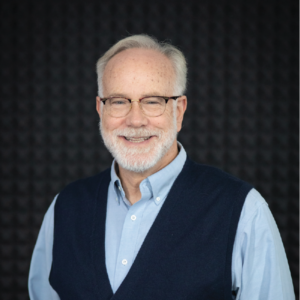
Mark D. Roberts
Senior Fellow
Dr. Mark D. Roberts is a Senior Fellow for Fuller’s Max De Pree Center for Leadership, where he focuses on the spiritual development and thriving of leaders. He is the principal writer of the daily devotional, Life for Leaders, and t...