


Learning to Lead with Care: Interview with Nikki Daniels
Learning to seek the best for those under our leadership is challenging work—and not just for a select few. Whether you’re naturally wired for empathy or struggle to slow down enough to truly see others, learning to care for others (as well as for yourself) is a leadership skill that takes time, patience, and humility to finely tune.
Luckily, this isn’t cause for discouragement. According to Nikki Daniels, head of school for Monte Vista Christian School, this lifelong journey of learning to seek the best for those entrusted to our care provides an incredible invitation—one that frees leaders from the burdens of self-reliance, over-functioning, and pride, and instead embraces the call to quietly, but courageously, follow Jesus. In this interview, Nikki reminds us that it’s in this orientation toward Christ that she has learned to embrace vulnerability, listen courageously, trust others to help, and ultimately leave behind a wake that steadies, calms, and lifts those she leads.
To begin, would you share a bit about who you are, your current role, and the journey that led you into your present vocation?
I’m currently serving as the Head of School at Monte Vista Christian School in Watsonville, California. It’s about halfway between Monterey and Santa Cruz on the beautiful Central Coast. We are a Christian school with a little over 800 students total.
I come from a family of educators. And while I did teach my first year out of college, my path really came through other aspects of Christian ministry and through earning my MBA. So I came more from the operational side, through avenues like fundraising, finance, and development. I also served in Christian higher education at Wheaton College and North Park University, and then moved into Christian secondary education where I had the opportunity to serve for a decade at a wonderful Christian high school called Wheaton Academy.
And then, almost a decade ago, God called my family and me out here to MVC. COVID hit about two and a half years after we got here, and I moved into my current role as head of school in 2021, so right in the midst of all that.
In our Flourishing Leaders research, we’ve found that seeking the best for others is a tangible expression of being oriented by hope. How does the hope you hold in Christ shape the way you lead and care for others?
When I think about being “oriented”, I think of a journey metaphor, with our hope in Christ being the North Star. This orientation toward hope gives us a secure expectation of a positive resolution or outcome. As a leader, if that is what I am solidly navigating toward, then I have the right focus for myself and for those that I lead. And when I’m secure in the fact that the outcome is going to be positive—and by that I mean that I trust in who Christ is and what he’s promised—then the need for me as the leader to try to manipulate, control, and figure everything out on my own goes away. When I am oriented by hope, I can walk alongside those whom I am leading in the journey and more fully nurture and care for them, without being preoccupied with fixing or ensuring an outcome.
When I am oriented by hope, I can walk alongside those whom I am leading in the journey and more fully nurture and care for them, without being preoccupied with fixing or ensuring an outcome.
When I think about being oriented by hope, two different family hikes come to mind. The first we did back when my kids were little in Acadia National Park in Maine. We were hiking to Squeaker Cove, and we didn’t know where it was. We were also on an island that only had one boat to catch per day, so we had to get back to the boat in order to get off the island. It was the most stressful hike ever, ending with us literally running to catch the boat so that we wouldn’t be stuck on the island. This hike was an example of not being oriented by hope, because we didn’t know where we were going or how long it was going to take to get there.
But hiking the Mist Trail in Yosemite several years back was a completely different experience. That’s a trail that I had been on many times before. So the experience of doing that trail with my kids—where I could be fully present, reassuring them during the journey, and enjoying the beauty—was one that was oriented by hope. It allowed me as a leader to be fully present and to journey alongside my family. And I find that very similar to what it’s like leading people while being rightly oriented toward hope in Christ.
Our research uncovered that seeking the best for others reflects the interdependent relationship between loving others and loving ourselves. How do you understand that relationship? What practices have helped you care well for yourself while carrying significant responsibility for others?
I had a supervisor years ago that would say that leaders must be aware of their own “wake.” In other words, as leaders we need to care about our impact, consider what we bring to the table, and understand how a room changes when we walk into it. I can look back on my career and point to times when my wake was a healthy one—a wake that lifted folks up. But then there have been times of struggle, where I look back and see that my wake did not help to calm others, but instead created waves.
Leaders must be aware of their own ‘wake’…We need to care about our impact, consider what we bring to the table, and understand how a room changes when we talk into it.
So now I approach this as a call to be healthy and whole as an individual human in order to create a wake that lifts others up. That means I have to be aware of what I need to be doing to grow, to develop as a person and as a leader, and to acknowledge that any effort I put toward that goal is not selfish or self-focused. It’s something that has a bigger, broader impact that benefits my team.
I’ve learned to pursue health in my life in front of others, and to do it in a way that is actually visible. Then, those I lead know they have the permission to care for themselves. I do this specifically by how I start and end my days. In the mornings, I try to be really intentional about having time with the Lord. I know some people do that at home, but I do that in my office, which I think sends a really important message. On the flip side of the day, I try as often as I can to end my day with some fresh air, either through exercise outside or an activity for my physical health. It’s interesting because I live on campus, so if I decide to go for a run after work, there are a whole lot of people who know about it! And while that can have its own challenges, it’s also good for people to see that it is a priority I am setting. Early in my career, I thought, “It’s 5 o’clock, should I still be working in my office?” But now I think, “It is 5 o’clock. People need to see that my focus has shifted and I’m being intentional in other areas of my life.”
It’s not uncommon for leaders to struggle with boundaries, people pleasing, and overextension as they seek to care well for others. How have you learned to avoid these pitfalls without compromising your commitment to care for those you lead?
Leading well means following Christ with intentionality. So, to lead well, you have to be following well. Being focused on Christ means there’s a natural calming and a non-anxious presence that we’re always pursuing as leaders. If we truly are focused on pleasing Christ, then we aren’t focused on pleasing those around us—and especially not the tyranny of the urgent or whatever happens to be on fire in the moment. This comes more naturally when we are focused on what Christ is asking of us and what it looks like to follow him well, instead of being focused on what it looks like to lead our team well from a human perspective. But when we focus on following Christ well, the leading of the team will come naturally from that.
To lead well, you have to be following well.
This has been a huge learning curve for me. When I look back on times of intense stress, especially early in my leadership journey, I see that I genuinely believed that the best thing I could give to someone was my immediate attention—to drop everything and do what they wanted me to do. But I’d get to the other side of it and realize, “That was a roller coaster without purpose.” In my effort to care, I just got on and went for the ride with them.
But that’s not what anyone actually needs. I believe that nobody wants the frantic leader who is chasing outcomes only. Nobody wants the leader who’s playing whack-a-mole on a daily basis. That kind of leader might be what we think we want, but actually we want the leader who puts their own oxygen mask on first. We want someone with the ability to see the big picture, to do what needs to be done strategically, and then to care for us and our needs.
Over time, I’ve learned that the best gift I can give to a team member who’s in need, spinning, or believes their priority should be my priority, is a leader who pauses and takes a breath. The sense of calm intentionality that comes from being focused on the big picture and what God is calling me to has really helped me to navigate the cacophony of voices each day brings.
Flourishing leaders are good at cultivating places of belonging that lead to the flourishing of others. How can leaders foster such cultures—especially within diverse teams? What specific practices have been effective in your organization?
First, I think there’s an aspect of belonging that is unique to our professional roles. In other words, what does it look like for someone to really feel that they belong in their work or specifically within their team? And so, when I think about that first one, I think of how, as a leader, I can demonstrate regularly that I cannot do this alone. And that can be intimidating because there’s always that part of us as leaders who thinks we have to be superman or superwoman. But the truth is, the more I’m able to be open and vulnerable about the ways in which I need my teammates, the more my team will know they are needed and feel that deeper sense of belonging and flourishing.
The more I’m able to be open and vulnerable about the ways in which I need my teammates, the more my team will know they are needed and feel that deeper sense of belonging and flourishing.
There’s no leader who can do it without their team. So I want to find ways in the course of our shared work to make that really obvious, like asking questions, acknowledging when I’m unsure about something, and helping others see that I actually need their wisdom. It’s inviting them into those spaces and then really empowering them to have influence. Teams flourish when they know that they are bringing something to the table that matters to the people around them and to the people they’re serving.
Secondly, there’s this other side that I think is so often overlooked, and that is the holistic, more personal side. The side that wonders, “Can I show up in this place to do my job knowing that I matter as a human?” and, “Is my unique self also crucial for this place?” We’ve been super intentional in recent years at MVC to really celebrate the whole person. One of the things about a whole person that often gets overlooked in the work environment is their family. I mean that for single adults as well. So we’ve been intentional about creating opportunities for families to also experience MVC and what happens here, like a family picnic each August and turning our annual Christmas party into a dinner where families can join and be part of celebrating their loved one’s years of service.
We also have a shared culture of showing up for the little things. One of my colleagues has this I-show-up policy that I try to emulate. It’s this idea that when you are invited, if at all possible, you show up for people. That can sound overwhelming, but there are many ways that you can do this, whether it’s attending events outside of work, or bringing meals when babies are born— all those different pieces. Over time, it fosters those grassroots opportunities where people start doing that for one another—and I’m not involved. That’s when you get the multiplier effect, because it’s happening all the time, and I actually have nothing to do with it! But any place that I can support that, anything I can do to foster that kind of space, is so important.
Seeking the best for others requires deep and courageous listening. In your experience, what makes listening difficult for leaders? Additionally, how do you discern when to step in and when to refrain from overfunctioning and doing work that isn’t yours to do?
Two things come to my mind when I think about what makes listening difficult for leaders. The first is fear. When someone is sharing something that is challenging about the organization, our work, or about me as a leader, there’s an anxiety that can creep in. It makes me think that if I don’t use my voice in this exact moment to speak up, defend, or push back, I’m going to let the school and the work we do look bad—or even make myself look bad. It’s here we need to do our inner work to get that place in check so that we can truly engage in deep and courageous listening.
The second challenge is that nagging feeling and false assumption that we actually know better. Some of that comes from years of experience, some comes from personality, and some of it is because, as leaders, we often do have access to information that is much wider and deeper than the information whoever it is we’re engaging with has. We might have facts or insights to counter, but we’re not able to share those for whatever reason. This is where we rein ourselves in so that we can courageously listen to this person’s experience, because their reality is different. While I can lead and offer insights along the way to help those two realities meet, I must respectfully first leave space for the reality that this person is living.
And then there’s discerning when to step in. All I can say is the longer I am in this position, the less and less I step in. The more seasoned I become in my leadership, the more I realize things are often better off without me. If there is a challenging scenario and I am able as a leader to allow my team to own it and work their way through it, the ownership is clear. If it goes well, there’s no confusion about who succeeded. The reward and the growth that come from that are clear. And if it goes horribly, then the lessons will be clear for that team member. Whether it’s the kind we love—which is the high-five—or the kind that just blew up in our faces, the learning is so much greater without me.
The more seasoned I become in my leadership, the more I realize things are often better off without me.
That doesn’t mean I never lean in or engage. But often there’s more room for learning than we initially sense as those striving for excellence day in and day out.
How have you seen a “trickle-down” effect when leaders intentionally seek the best for those entrusted to their care—whether employees, managers, or stakeholders? What impact does that have on an organization?
One of my team members often says, “Remember: leadership leaks.” And I always think “mm, not sure that’s a positive image!?” But it’s true, whether it’s intentional or not. It makes me think of the example Jesus left for us during his years on earth. He understood that in everything he did, he was creating a trickle-down effect for his followers. It comes down to being consistent and intentional. And over time, that creates a flywheel.
I think of the values that we have at MVC and how we’ve been intentional both in naming and demonstrating them. Over time, those values become powerful. Just naming them has helped the faculty, staff, students, and even parents rally around them. Our second value is “See Every Person.” And that has really created this environment that fosters intentionality in seeking the best for others. This goes back to caring holistically for people, and you know it’s working when the whole organization is doing it when you’re not around.
Recently, I learned over a weekend that we had a student who had to withdraw due to health reasons, just two months away from graduation. I immediately started thinking about how we were going to care for this family. But when I came in Monday morning, I had an email from the guidance counselor who had already collected notes in each of this senior’s classes from teachers and students. The email was basically, “If you want to add a note, feel free.” I was just an afterthought—which I love! Because “Seeing Every Person” has become contagious. It trickles down from those who are visible to those places which may not be as visible, but are equally, if not more, effective.
This becomes a form of accountability. “See Every Person” is used by students and by parents to hold all of us accountable. It’s given us a shared language that we can interact around. We’ve made that commitment to them, so when they’re not experiencing it, they can name that. And that’s a good thing.
About Nikki Daniels
Nikki Daniels is the head of school at Monte Vista Christian, a boarding and day school serving 815 students in grades 4-12 in Watsonville, California. A native of upstate New York, she did her undergraduate work at Wheaton College (IL) and earned an M.B.A. at North Park University. Her twenty-seven-year career spans both higher and secondary education leadership across fundraising, marketing, finance, human resources, and operations. In addition to her full-time role at MVC, Nikki is a leader in numerous organizations supporting Christian education around the world and is blessed to parent, along with her husband, three teenagers who bring her great joy.
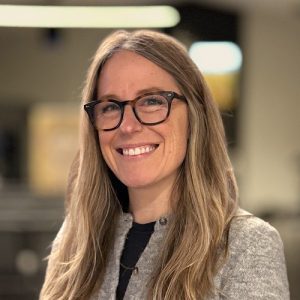
Chelsea Logan
Content and Production Specialist
Chelsea Logan serves as the content and production lead for the De Pree Center. She holds a BA in the Study of Religion from UCLA and an MA in Theology from Fuller Theological Seminary. Chelsea has held leadership positions in various ministry and education settings. She and her husband...
Comments (1)
Insightful comments! I shared it with our staff at last week’s meeting. Best quote: “Leaders must be aware of their own ‘wake’…We need to care about our impact, consider what we bring to the table, and understand how a room changes when we talk into it.” Also, the importance of leading with hope and “…when we focus on following Christ well, the leading of the team will come naturally from that.” Thank you, Nikki Daniels! Thank you, Chelsea Logan!