


Seeking the Best for Others in the Third Third: Unexpected Input from Contemporary Research
My last article was entitled, “Biblical Guidance on Seeking the Best for Others in the Third Third of Life.” I showed that Scripture teaches us to seek the best for others in a variety of ways, such as urging us to love our neighbors and encouraging us not to seek our own good but rather “the good of others” (1 Cor 10:24, NIV). Many older biblical figures, such as Moses, Aaron, Miriam, and Naomi, demonstrate what this looks like in action.
Having laid a biblical foundation for seeking the best for others when we’re in the third third of life, I’d like to share with you some of my findings from relevant academic research in fields such as psychology and gerontology. I’ve been surprised to learn that, indeed, social-scientific studies have quite a bit to add to our understanding of this topic.
Prosocial Behavior and Older Adulthood
As I began looking for research related to seeking the best for others, I encountered a word with which I was unfamiliar: “prosocial” (or in earlier writings, “pro-social”). An article in the Handbook of Psychology explains that this word was “created by social scientists as an antonym for antisocial.” It began showing up in academic literature in the 1960s. (Use of the noun “prosociality” came later and is still less common, according to Google’s Ngram Viewer.) In the Merriam-Webster dictionary, “prosocial” means “intended to help or benefit another person or group” or “relating to or promoting behavior that benefits others or society.”
Though the words “prosocial” and “prosociality” are fairly new, interest in what they signify is centuries old. Philosophers, theologians, novelists, and social scientists have a long history of investigating altruism, which Merriam-Webster defines as “unselfish regard for or devotion to the welfare of others.” Yet, altruism focuses primarily on inner motivation for actions that are good for others. Prosociality has to do more with the actual behavior, that is, with prosocial actions in addition to what is motivating them.
Social scientists who study prosocial behavior have wondered whether or not it is correlated with age. For example, professors Ulrich Mayr and Alexandra Freund ask “Do We Become More Prosocial as We Age, and if So, Why?” Their research-based answer to the first question is clear: “Older adults contribute—through charitable donations or volunteering—more to the common good than younger adults” (p. 248). With regard to the second question, however, Mayr and Freund write, “we currently can give only a partial answer: Older adults seem to genuinely care more about the common good or the well-being of other people than do young adults” (p. 248). Yet the reasons for this are not fully understood.
One possible explanation for the correlation between prosociality and getting older comes from the work of Laura Carstensen, professor of psychology and founding director of the Stanford Center on Longevity. An influential article by Carstensen and two colleagues, “Taking Time Seriously,” presents “a theory of socioemotional selectivity.” This theory proposes that as people get older and they perceive that their days are numbered, they make selective choices to enhance their emotional wellbeing in the present time. Investing in others, especially those with whom we have close relationships, becomes a higher priority as we get older, according to Carstensen. Thus, we might be moved toward prosocial actions.
Investing in others, especially those with whom we have close relationships, becomes a higher priority as we get older.
Another possible explanation for prosocial expansion as we age points to the increase in empathy among older people. A 2020 study that focused on changes in empathy throughout life “found that empathy increased across the life span, particularly after age 40” (p. 244). This increase may have to do with what we experience throughout our lives: “For example, having children, witnessing the declining health of family members, or reflecting on one’s place in the world after retirement may change people’s perspectives on life and trigger more empathic processes” (p. 250). More empathy would spur us onto more prosocial activity.
To be sure, not all people in the third third of life are seeking what’s best for others. Selfishness and self-absorption plague us in all seasons of life. Yes, there are grumpy old men, including me at times. But evidence from many credible studies shows that, overall, older people tend to engage in more prosocial actions than younger people. This may also be a function of older people having more time to serve others and more financial resources to share. Thus, “70-year-olds donate a four times larger percentage than 20-year-olds” (“Age Related Changes, p. 117). Nevertheless, researchers have found “evidence for an age-related increase in focus on others’ welfare and the greater good in general” (p. 116).
Generativity as Seeking the Best for Younger Others
Older people are particularly eager to serve those who are younger than they are. Generativity, as it is often called, “can be considered as one facet of prosociality, namely concern and caring for future generations” (“Age Related Changes,” p. 119). The Merriam-Webster Dictionary defines “generativity” as “a need to nurture and guide younger people and contribute to the next generation.” Generativity could be described as a deep desire to leave a legacy for the future, not just a financial legacy, but a legacy of excellence, example, empowerment, and encouragement.
The significance of generativity was first emphasized by developmental psychologist Erik Erikson. In his earlier writings, he saw generativity as crucial for middle-adulthood, ages 40-65. But as he got older, Erikson recognized that a concern for generativity remains strong beyond age 65. Thus, he wrote in The Life Cycle Completed,“[I]ndeed, old people can and need to maintain a grand-generative function” (p. 64). According to Erikson, if we wish to thrive as we get older, then we must pay attention to and express our generativity.
We find generativity in several biblical passages, notably Psalm 71:17-18:
O God, from my youth you have taught me,
and I still proclaim your wondrous deeds.
So even to old age and gray hairs,
O God, do not forsake me,
until I proclaim your might
to all the generations to come.
The psalm writer, an older person with “gray hairs,” recognizes that his life will soon be over. Before he dies, however, he yearns to make sure younger people understand God’s “might” as revealed in God’s “wondrous deeds.”
Some Ways We Exercise Our Generativity
The desire to make a difference for the next generations is built into our mental, emotional, and spiritual DNA. You may already be in touch with your generativity. If you are a grandparent, for example, you are likely concerned about the future of your grandchild (or grandchildren), and not just their personal future, but also the future of the world in which they will live. You are eager to make a difference in their lives and their world, a difference that will endure long after you are gone.
The desire to make a difference for the next generations is built into our mental, emotional, and spiritual DNA.
But concern for the next generations isn’t limited to grandparents. My friend Bryan leveraged his professional success to create a scholarship fund that has enabled dozens of young people to take advantage of outstanding educational opportunities they might otherwise be unable to afford.
Increasingly, older adults are exercising their generativity by serving in schools, especially underserved elementary and middle schools. Marc Freedman’s wonderful book, How to Live Forever: The Enduring Power of Connecting the Generations, tells many stories of older adults volunteering in schools through the Experience Corps program. He chronicles the difference this has made for the students and for the grown-ups who serve them. For students, learning improves, test scores go up, and behavior problems plummet. The older adult volunteers also had higher test scores, not in math and science, but on tests of physical and mental health.
Another common expression of generativity is mentoring. Many older adults are investing in younger people, coming alongside them to help them flourish. Mentoring involves a deep relationship, one in which shared experience and mutual learning are key. (If you’d like to grow as a mentor to others, check out the De Pree Center’s Alongside Mentor Training. Plus, be sure to read Hilda Davis’s fine article, “Retirement Mentor: A New Type of Mentor.” You may also find helpful a piece I wrote called, “Mentoring in the Third Third of Life.“)
Personal Benefits of Seeking the Best for Others
Marc Freedman’s work shows that when we seek the best for others, including and especially what we might call “younger others,” we benefit personally. Many who write about prosociality make a similar point:
In addition, there is mounting evidence that acting in a prosocial manner also has positive effects on the givers’ well-being and potentially also their health (“Age Related Changes,” p. 117).
From a healthy aging perspective, a potentially even more important implication can be derived from the hypothesis that engagement with prosocial and/or ego-transcending goals may promote a greater sense of meaning and purpose in life. Meaning in life in turn is a robust predictor of physical health (p. 121).
When we are seeking the best for those who are younger, like grandparents with their grandchildren or Bryan with his scholarship fund, we receive a double benefit. Neuroscientist John Medina, in Brain Rules for Aging Well, explains that relationships, especially intergenerational ones, help our aging bodies and brains to remain strong:
It’s best to have friends of all ages—including kids. That notion may transcend our culture’s perspective, but not our culture’s data. The more intergenerational relationships older people form, the higher the brain benefit turns out to be, especially when seniors interact with elementary-age children. It reduces stress, decreases rates of affective disorders such as anxiety and depression, and even lowers mortality rates (p. 24).
These positive results have to do, in part, with the fact that relationships with younger people demand more from us physically and mentally.
Now, it would be sadly self-serving if we were to seek the best for “younger others” mainly to benefit ourselves. But the fact that we can be helped through serving others can certainly encourage us to do this, especially when it isn’t easy. My friend Mike spends a day each week caring for his preschool-aged granddaughter. He loves her and enjoys his time with her, but finds it exhausting. It takes him a full day of rest to recover. Mike was encouraged to learn that the taxing nature of his time with his granddaughter may well be adding to his own health and longevity, in addition to his fun and joy. But personal benefits are not what motivate him to do it. They’re just frosting on the cake of prosocial love.
Prosociality vs. The Silver Tsunami
Experience reveals that there are stingy, self-centered older adults and generous, self-sacrificing younger people in the world and even in the church. But social scientific research indicates that, on the whole, older people are more inclined than younger people to seek the best for others. This inclination among older people may come from our awareness of the shortness of life, empathy born out of experience, and the possession of discretionary time and money.
The correlation between older adulthood and prosociality is good news for families, schools, communities, and churches. It’s good news for those who will be served through prosocial actions as well as the actors themselves. But it’s also good news for the world, given that the percentage of older people on earth is growing steadily. According to a report from the United Nations Population Fund,
The world is ageing rapidly. Between 1974 and 2024, the worldwide share of people aged 65 almost doubled – increasing from 5.5 per cent to 10.3 per cent. Between 2024 and 2074, this number will double again, increasing to 20.7 per cent, according to United Nations population projections.
Statistics like this can seem frightening. Beginning in the late 20th century, people often label the growth of the older adult population as a “silver tsunami,” a wave that has the power to overwhelm us and disrupt or destroy the world as we know it. (When I searched for “silver tsunami” on Google, it found 533,000 hits.)
Behind the “silver tsunami” narrative lies an assumption about older people. It’s taken for granted that we will flood society with our endless needs while contributing little to the common good. Of course, older people do have distinctive needs and may require special care in our later years. But what if we were not just flooders, but contributors to society? What if we were to use our time, talents, and treasures in seeking the best for others? What if we were encouraged to pay attention to our prosocial leanings, including our generativity and our longing to make the world a better place?
But what if we were not just flooders, but contributors to society?
As I explained in last month’s Third Third Life article, Scripture teaches and urges us to seek what’s best for others. For this reason alone, we should do it. But academic research shows that, for those of us in the third third of life, this particular calling might come more naturally than it did when we were younger. This fact encourages us to pay attention to our prosocial feelings, including but not limited to our generativity.
Nurturing Our Prosociality in the Church
This does not mean, however, that we should simply sit back and wait for prosocial feelings to emerge. We can help ourselves and our peers to develop and nurture our prosociality. In fact, the church is especially well-suited for this effort in three significant ways.
- First of all, Scripture exhorts us to seek, not “our own good, but the good of others” (1 Cor 10:24, NIV). We will be reminded of this exhortation when we’re part of a church that teaches biblical truth and seeks to live accordingly.
- Second, the church is well suited to nurture prosociality because it is a “religious” organization, and, according to a recent meta-analysis of almost 60 years or research, “Religiosity Predicts Prosociality.” If your religion is based on the life and teaching of Jesus, for example, then you will be strongly motivated to seek the best for others as an expression of your religious convictions (see Phil 2:3-11).
- There is a third reason that the church is well-suited to nurture prosociality. In their article, “Predictors of prosocial behavior: Differences in middle aged and older adults,” Jennifer Wenner and Brandy Randall show that grit, defined as “perseverance in striving for long term goals despite adversity, challenges, and failure,” predicted “prosocial behavior in older adults” (p. 1). Moreover, they found that “A sense of community cohesion was predictive of prosocial behavior despite age” (p. 1). The church can provide this sense of community cohesion in addition to offering teaching and examples that commend prosocial behavior.
Conclusion
No matter our age or stage, we should seek the best for others. This obligation doesn’t stop when we’re in the third third of life. If anything, being older can enable us to grow rather than shrink in prosociality. We can discover new ways to imitate the example of Christ, who looked, not to his own interests, but to the interests of others (Phil 2:4). Through our fellowship with Christ and Christ’s people, we can be encouraged to imitate his way of servanthood, for the good of others, for our own benefit, and for the glory of God.
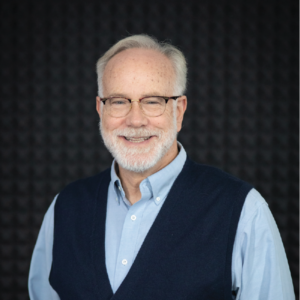
Mark D. Roberts
Senior Fellow
Dr. Mark D. Roberts is a Senior Fellow for Fuller’s Max De Pree Center for Leadership, where he focuses on the spiritual development and thriving of leaders. He is the principal writer of the daily devotional, Life for Leaders, and t...