


Discerning What Is Best in the Third Third of Life
Throughout our lives, we face the challenge of trying to discern what is best. For example, when we’re younger, we may wonder what college will be the best for us, what career path will be best, what person will be the best one to marry, and so on. In midlife, we may wrestle with the best place to live, the best company to work for, the best way to parent our children, or the best church for our family.
The need to determine what’s best doesn’t stop when we enter the third third of life. In fact, those of age 55 and older face some of the most perplexing “What is best?” questions of all, such as:
• Is retirement the best option for me? If so, when will be the best time to retire? And what is the best way for me to live in retirement? Should working be part of my best retirement experience?
• Where will be the best place to live as I get older? Would it be best for me to leave my home, church, and friends by moving near my children and grandchildren, or to a place with a warmer climate? Would it be best for me to downsize my home or move into a senior living community?
• What will be the best way for me to use my financial resources in the third third of life?
• What is the best way to deal with the losses of this season of life, which can include the loss of loved ones, influence, capability, and/or health?
• What will be the best purpose for my third third life?
• What is the best way to be prepared for death and life after death?
• What is the best legacy I can leave when I’m gone?
As I said, in the third third we face some of the most confounding “What is best?” questions of life. This reality leads us to ask one additional, urgent question:
How can we discern what is best in the third third of life?
How can we discern what is best in the third third of life?
One Way That Will Not Work
Before I seek to answer that question, I want to note one way that will not work if we want to live our best possible third third life. It’s the way of living on autopilot, going with the flow, doing what comes culturally. It’s accepting without reflection the common stories of aging, stories of decline, irrelevance, inability, or purpose focused mainly on play and pleasure.
Millions upon millions of Americans give little thought to how they will live in the third third of their lives. Some make financial plans, but very few make plans for how they will actually live, what they will do, how they will flourish, and how their lives will have meaning. When asked about their lack of planning, people say simply that they’ll figure it out when the time comes. What that usually means is that they will not know how best to live as they get older. It also means that, on average, folks 65 and over will watch more than 7 hours of television each day (The Nielsen Total Audience Report). And when we are not watching traditional TV, odds are we are enjoying social media like YouTube. Business Insider reported in March 2025 that YouTube watching by folks 65 and over has almost doubled in the last two years (96% increase).
I’m not suggesting that it’s a terrible thing to watch broadcast TV or enjoy a few YouTube videos. My wife and I often watch one of our favorite TV shows in the evening (one show, not 7 hours). Plus, sometimes I’ll view a few YouTube clips of Broadway musicals, Family Feud outtakes, or Saturday Night Live episodes from my college days. But millions of folks in my generational cohort end up spending hours and hours in front of their TVs because they haven’t figured out what is best for them in this season of life. (A recent study from the Harvard T.H. Chan School of Public Health found that each additional two-hour increment of TV watching by older adults “was associated with a 12% . . . reduction in the odds of healthy aging.” Ouch.)
Paul Prays for Philippian Discernment
So, to put it plainly, if we’re going to live our best lives as we get older, we need to discern what is best and not simply live an unexamined life. (Sorry, Fiyero.) We need to do that for which the Apostle Paul once prayed as he wrote to the Christians in Philippi,
And this is my prayer: that your love may abound more and more in knowledge and depth of insight, so that you may be able to discern what is best and may be pure and blameless for the day of Christ, filled with the fruit of righteousness that comes through Jesus Christ—to the glory and praise of God (Philippians 1:9-11, NIV).
So, to put it plainly, if we’re going to live our best lives as we get older, we need to discern what is best and not simply live an unexamined life.
Paul’s prayer report helps us to “discern what is best” for our lives, including our third third lives.
In this article, I will examine what Paul means when talking about discerning what is best. I will also look at how we might do this if we follow Paul’s lead in this passage. Next month, my article will focus on the results of discerning what is best.
What Does It Mean to “Discern What is Best”?
In Philippians 1:9-10, the Apostle Paul prays that the Christians in Philippi would “be able to discern what is best.” What does Paul mean by discern what is best?
The Greek verb translated here as “discern” is dokimazō. This verb can mean “to make a critical examination of something, to examine, to draw a conclusion about worth based on testing, to prove, or to approve.” The NIV translates dokimazō with “discern.” Other English translations go with “determine” (NRSV), “decide” (CEB), or “approve” (KJV, ESV). All these translations point to the use of our thinking ability to evaluate something so that we might be able to affirm or approve it.
What should we evaluate and approve? The NIV and NRSV say it’s “what is best.” Other options include “what really matters” (CEB) or “what is excellent” (ESV). The Greek behind these translations reads literally, “the things that are different, worth more, or superior.” No matter which translation you choose, the main point is clear. Paul prays that the Philippians will be able to discern the best things so they might value them and do them.
Discernment includes two primary activities. First, there is evaluation or examination. We look closely at whatever lies before us, trying to understand it accurately and truly. This can often be a difficult process when the matter at hand is complex. Second, discernment involves proving or approving something. It’s coming to a conclusion based on your examination and reflection. Discernment involves saying, “In light of all I’ve learned, I believe this is best. This is what we should value, support, applaud, and/or do.”
How Can We Discern What is Best?
Paul could have simply prayed for the Philippians, “Lord, help them discern what is best.” That would be a fine prayer. But it’s not what he actually prayed. Rather, as Paul reports on his prayer, he says this:
And this is my prayer: that your love may abound more and more in knowledge and depth of insight, so that you may be able to discern what is best . . . (Phil 1:9-10a).
Paul’s prayer report can help us learn how to discern what is best in life.
Discern with Prayer
We might easily overlook something essential in this passage. Paul didn’t simply encourage the Philippians to discern what is best or teach them how to do it. Rather, he prayed for them. Following Paul’s example, whether we want others to discern what’s best or we need such discernment for ourselves, we’d do well to begin and continue in prayer.
Most obviously, we can ask God to help us discern what is best. When I was part of the H.E. Butt Foundation, I worked closely with Howard E. Butt, Jr., one of the wisest men I’ve ever known. When faced with a difficult decision, one in which discerning what was best was tricky, Howard didn’t rely on his own wisdom. Rather, he would pray, “Lord, give us wisdom.” This wasn’t a once-in-a-while prayer for Howard. In fact, I heard him pray this way dozens of times. Howard knew that discerning what is best requires divine help, and he did not hold back from asking for such help. In addition to praying for the wisdom to know what’s best, we can also ask the Lord for many other things that can contribute to the discernment process, such as knowing what matters, listening to people who can help us, openness to guidance from the Holy Spirit, and so forth.
Discern With Love Abounding in Knowledge
Notice that Paul did not actually ask the Lord to help the Philippians discern what is best. Rather, he asked that their “love may abound more and more in knowledge and depth of insight.” This would enable them to “discern what is best.” Therefore, following Paul’s logic here, if we’re going to discern what is best in our lives, then we also need our love to abound in knowledge.
At first, this might seem to us like an odd juxtaposition. Love and knowledge are often assumed to be distinct or even contradictory. Love is a matter of the heart. It’s all about emotion. Knowledge is a matter of the head. It’s all about reason. You can have one or the other, but not both.
Yet Paul, as he prays, assumes that love and knowledge can and should go hand in hand. In this assumption, he reflects what we find elsewhere in Scripture, including Paul’s own letters. In writing to the Corinthians, for example, Paul says that if he “can fathom all mysteries and all knowledge . . . but [does] not have love, [he is] nothing” (1 Cor 13:2). Great knowledge will be applied well only if we have great love. Otherwise, though we may be brilliant, we are nothing.
The combination of knowledge and love can also be seen in Ephesians 4:15, where Paul writes, “But speaking the truth in love, we must grow up in every way into him who is the head, into Christ.” Yes, we must know what is true if we’re going to be mature in Christ. But knowing the truth isn’t enough. Rather, we must speak the truth in love. Love for others motivates us to tell them the truth and helps us to communicate in a kind and humble way.
Knowledge of God is also essentially connected to God’s love for us. In 1 John 4:7-8, we read, “Dear friends, let us love one another, for love comes from God. Everyone who loves has been born of God and knows God. Whoever does not love does not know God, because God is love.” In this passage, love is a result of knowing God, such that one who doesn’t love doesn’t know God. God is not just truth, according to John, but also love.
Given the way Scripture connects love and knowledge, we should not be surprised that Paul prays for the Philippians, “that your love may abound more and more in knowledge and depth of insight” (1:9). When this happens, the Philippians will be able to “discern what is best.” The same is true for us. Love and knowledge work together to help us exercise wise discernment.
Let me share with you a personal example of what I’m talking about here. Nine years ago, I was terribly sick with a mysterious condition my doctors could not diagnose. Thus, they were unable to “discern what was best” for my treatment, and I kept on getting worse. But I had in my life someone with lots of knowledge and love for me, my wife, Linda. She knew how sick I was and was motivated by love to take me to the emergency room of the hospital. Then, when they were going to send me home, Linda, still motivated by love, used her knowledge of me and my condition to convince the ER to summon an infectious disease specialist to see me. With this doctor’s superior knowledge and concern for me, she admitted me into the intermediate care unit of the hospital and began medicating me for a variety of possible ailments. One of them worked, thanks be to God. Were it not for the combination of love and knowledge in Linda and in Dr. Shriner, I would almost surely have died from Rocky Mountain Spotted Fever. Because of love combined with knowledge, not to mention God’s mercy, I recovered completely from my potentially fatal illness.
Discerning What’s Best in Community
My recovery from Rocky Mountain Spotted Fever illustrates something vital about discerning what’s best, something we might easily overlook. When we read Paul’s prayer in Philippians, given the pervasive individualism of our culture, we might read it as if it were addressed to us individually. I might think Paul is praying like this, “I pray, Mark, that your love will abound more and more in knowledge, so that you as an individual will be able to discern what is best.” To be sure, my love must abound in knowledge so I might discern what’s best. But given all I know about the Apostle Paul (about whom I wrote my PhD dissertation), including his background, ministry, and theology, I’m pretty sure that when he prayed for the Philippians, he was praying for them as a group, as a body, as a church of Jesus Christ. Yes, individuals need to discern what’s best. But individual Christians do this best in the context of Christian community.
Yes, individuals need to discern what’s best. But individual Christians do this best in the context of Christian community.
When I think of some of the trickiest discernment challenges I’ve faced in life, I’m grateful for my brothers and sisters in Christ who helped me discern what is best. Twice, for example, my friend Tod saw way before I did that God was calling me to a new job. He, along with my wife, my spiritual director, and others who knew me well, helped me discover what I would have missed if I had tried to discern what is best all by myself.
How to Discern What is Best for the Third Third of Your Life
Of course, much, much more could be said about the practices and nuances of discernment. But, for now, I’d like to summarize what we learn from Paul’s prayer for the Philippians:
First, if you’d like to discern what is best for your life, pray, pray, and pray some more. Ask the Lord to help you in the discernment process.
Second, ask that your love will overflow in knowledge. Yes, this means praying that God will increase both your love and your understanding.
Third, discern what is best in community with others who know you, love you, and will seek God’s will for your life. Christian discernment happens best in relationship with our sisters and brothers in Christ.
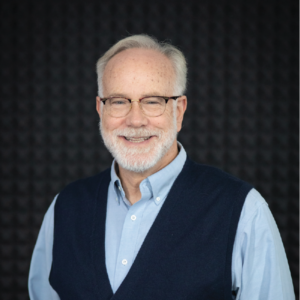
Mark D. Roberts
Senior Fellow
Dr. Mark D. Roberts is a Senior Fellow for Fuller’s Max De Pree Center for Leadership, where he focuses on the spiritual development and thriving of leaders. He is the principal writer of the daily devotional, Life for Leaders, and t...