


What Are You Doing for the Rest of Your Life?
“Mark, what are you doing for the rest of your life?” I’ve been hearing this question quite a bit recently. Why? Because I officially retired from the De Pree Center at Fuller Seminary on April 1, 2025. Though I continue to work on an hourly basis for the center and am spending lots of additional time working on third third projects, preaching in churches, and mentoring younger leaders, I am no longer a salaried worker. But, when people hear that I’m retired, they often ask what I’m doing for the rest of my life.
It’s likely, though not guaranteed, of course, that the rest of my life could add up to quite a few years. The latest Actuarial Life Table from the Social Security Administration shows that the average life expectancy for a 69-year-old man like me is 15.34 years. By the way, that’s quite different from how it was in 1935, when Social Security was created. Then, the average life expectancy for a man in the U.S. was about 59 years. Today, however, odds are I should experience a good long “rest of my life” before it’s time “to hang up the mop,” as my friend Howard used to say.
Like most people in my age cohort, I’m quite interested in my answer to the question, “What am I doing for the rest of my life?” I wonder how I will spend my time in the next 15 years. What will be my purpose? My identity? My place of belonging? If you’re in or near the third third of life, I expect you’ve also been asking questions like these.
In this article, however, I want to think about the “rest of your life” question in a different way. I’d like to consider not so much what you’re going to accomplish in the course of your life as how you’re going to rest in the midst of all you’re doing. My question is: What are you doing for rest in the rest of your life? I’m also wondering: Why are you choosing to rest (or not) in this way? How’s it going for you? How do you think of rest? How well do you rest? What happens when you rest well? What kinds of rest are important and why? Why does rest matter?
My question is: What are you doing for rest in the rest of your life?
Why Rest Matters
I am asking these rest questions for several reasons. For one thing, the Max De Pree Center for Leadership, where I now work part-time, has chosen the theme of rest for the next three months. I’m always intrigued by the De Pree Center’s themes and am glad to contribute to the conversation about them from a third third perspective. But, on a deeper level, I’m writing about rest because it matters so much to our flourishing in all seasons of life, including the third third. In fact, rest is one of the most crucial facets of a life well-lived.
How do we know this? Well, you can start at the very beginning, or should I say, the Beginning. In the Bible’s opening story, rest figures prominently. At first, we observe God creating all things, including human beings. When creation is finished, God says that it is “very good” (Gen 1:31). But the story of creation isn’t over yet. On the seventh day, God “finished the work he had been doing; so on the seventh day he rested from all his work” (Gen 2:2). Not only did God rest, but God also “blessed the seventh day and made it holy” (Gen 2:3). Why? Get this: “because on it he rested from all the work of creating that he had done” (Gen 2:3). Right at the very beginning of all things, God rested and then set apart a special day for rest. Though we may learn many lessons from God’s actions here, one thing is crystal clear: rest really, really matters. It matters to God. And, therefore, it should matter to us.
Rest really, really matters. It matters to God. And, therefore, it should matter to us.
Rest figures prominently throughout the Bible. It is highlighted in the Ten Commandments, Old Testament prophetic writings, the Psalms, the actions and teachings of Jesus, and several passages in the New Testament. We have lots in Scripture to affirm the value of rest.
But the importance of rest is reinforced by a variety of authorities beyond the Bible, including your own experience. I expect you know how good it feels and how effectively you function when you are well rested physically, mentally, and emotionally. You also know how bad it feels and how poorly you function when you are not well rested. I’m not talking only about sleep, but about a broader and deeper experience of multifaceted rest.
Academic studies have identified a variety of ways in which rest, including sleep, matters:
- “Micro-breaks” increase well-being and performance (link).
- “Deep rest” rejuvenates us on the cellular level and is “critically important” to healthy aging (link).
- “Optimal sleep . . . is crucial for maintaining both physical and mental health” (link).
- Lack of sleep “can cause harm to your body,” such as high blood pressure, heart disease, memory problems, and an increase in falls (link).
- “Improving sleep quality leads to better mental health” (link).
- “Sleep inspires insight” (link).
In the last twenty years, Harvard Business Review has published several articles that bear witness to the benefits of rest, including sleep, breaks from work, and vacations. For example:
- Restoration is essential for leaders. Breaks are essential, including detachment and relaxation (“Leading Is Emotionally Draining. Here’s How to Recover”).
- Recovery from work stress involves detaching psychologically from work, taking micro-breaks during the workday, and prioritizing recovery activities (“How to Recover from Work Stress, According to Science”).
- “Taking more vacation results in greater success at work as well as lower stress and more happiness at work and home” (“The Data-Driven Case for Vacation”).
- Lack of sleep “is the antithesis of high performance” and “endangers employees and puts their companies at risk” (“Sleep Deficit: The Performance Killer”)
- “Sleep-deprived bosses hurt their teams along with themselves” (“Sleep Well, Lead Better”).
Varieties of Rest
You’ll notice that rest includes but is not limited to sleep. Rest can take the form of “micro-breaks” (10-minute breaks from work), getting emotional distance from work, and engaging in restorative activities such as going on vacation. In her TEDx talk, Dr. Saundra Dalton-Smith, MD, explains, “Sleep and rest are not the same thing. . . . It’s only one of the seven types of rest.”
A few years ago, I had the privilege of partnering with Leah Archibald in a conversation with Dr. Saundra (as she prefers to be called) on the Making It Work podcast. She talked about different kinds of rest that are essential for our flourishing, referring to her book, Sacred Rest: Recover Your Life, Renew Your Energy, Restore Your Sanity. Dr. Saundra identifies seven types of rest: physical, mental, emotional, spiritual, social, sensory, and creative. We’re most familiar with physical rest, especially in the form of sleep. But how should we understand the other types?
A couple of examples from Dr. Saundra will help. She explains that social rest happens when we spend time with people who revive us rather than exhaust us. Spiritual rest is “the ability to connect beyond the physical and mental and feel a deep sense of belonging, love, acceptance and purpose.” It comes when we “engage in something greater” than ourselves, the sort of thing that happens when we pray. (See her TED ideas article.) If you read Sacred Rest, you’ll notice that Dr. Saundra, a committed Christ-follower, frequently mentions prayer as an essential element of various forms of rest.
Our Need for Spiritual Rest
Before I finish this article, I want to explore further the idea of spiritual rest. We can find this type of rest in the teachings of Jesus, most obviously in Matthew 11:28-30, where he says:
“Come to me, all you that are weary and are carrying heavy burdens, and I will give you rest. Take my yoke upon you, and learn from me; for I am gentle and humble in heart, and you will find rest for your souls. For my yoke is easy, and my burden is light.”
It’s clear that Jesus isn’t speaking literally here. He’s not talking simply about taking a break from physical work. Rather, he speaks of a deeper kind of rest, “rest for your souls.” We experience this quality of rest when we respond to Jesus’ invitation, “Come to me.” As we do this, we take Jesus’ “yoke” and learn from him. Whereas the yoke of the Pharisees was heavy and burdensome, his yoke is easy and light. Carrying this yoke enables us to find true, deep rest for our souls.
But what is the yoke of Jesus? This passage shows that it’s something Jesus offers to us. It involves learning from him. Learning what? Learning about the kingdom of God. Learning to live in a whole new way because of God’s love and grace. Learning to honor the sabbath wisely. Jesus makes known to us the secret of his easy, light yoke. According to Dallas Willard in The Spirit of the Disciplines, “The secret of the easy yoke is simple, actually. It is the intelligent, informed, unyielding resolve to live as Jesus lived in all aspects of his life, not just in the moment of specific choice or action” (p. 10).
Notice that the deep, soul-sized rest promised by Jesus isn’t mainly a life of leisure, play, and physical rest, though these might be part of such a life. Rather, “rest for your souls” comes as we live in the way of Jesus. When Jesus promises rest, he’s not offering seven days of sabbath and zero days of work. Rather, he’s inviting us into a relationship with him in which our souls are nourished, protected, renewed, and cherished. In this relationship with Jesus, we will also discover how best to experience the divinely-ordained rhythms of work and rest in a way that’s appropriate for our particular season of life.
Rest for Our Restless Hearts
Jesus’ offer of “rest for your souls” reminds me of a classic quotation by St. Augustine, a church leader and theologian from the fourth and fifth centuries A.D. In the first chapter of his book called Confessions, Augustine prays to the Lord, “You have made us for yourself, and our heart is restless until it rests in you” (Confessions 1.1.1, trans. Henry Chadwick). The Latin word translated here as “restless” is inquietus, which can mean “restless, constantly in motion, never still, sleepless, full of tumult, turbulent, unsettled, impatient, worried” (Oxford Latin Dictionary). As you read these words, do you relate to any of them personally? Do they describe your inner life, your heart?
According to Augustine, the bad news is that our hearts are naturally restless. But the good news is that God has made us for a relationship with God, and when we know God truly, we will experience deep, true rest. When we come to God through Jesus, we will receive “rest for our souls.”
The bad news is that our hearts are naturally restless. But the good news is that God has made us for a relationship with God, and when we know God truly, we will experience deep, true rest.
Rest in the Third Third of Life
So far in this article, I haven’t said very much about rest in relation to the third third of life. I will do so briefly before I wrap up, but you’ll have to wait until next month for more detailed reflections on rest for this season of life. Though not addressing rest as we get older directly, everything I’ve written here is relevant to third third folk because, after all, we are human beings, God’s creatures. No matter how old we are, rest in all forms is essential for flourishing. And spiritual rest, the kind of rest we receive through a relationship with Jesus Christ, is promised to all people without regard to age, gender, race, ethnicity, geography, or any other human characteristic.
Of course, many of us in the third third of life have a different experience of rest than we did in the first two-thirds. This has to do with the fact that most of us work less when we get older. Many will fully retire. Others, like me, will retire but continue to work in non-salaried roles, both volunteer and paid. Moreover, though these days, grandparents often provide childcare for their young grandchildren, which surely counts as work, they still have more discretionary time than they once had, time for rest and restoration. (My friend Mitch spends a full day each week caring for his young granddaughter. Though he loves this “work,” he says it takes him a full day to recover.)
As I have spoken with hundreds of older adults in the last few years about their hopes for life beyond full-time work, I’ve heard many express gratitude for the kinds of rest that are often more available in this season of life. I’m talking about things like daily recreation, afternoon napping, time with friends, and travel. (Of course, many in the third third struggle to sleep well, something I’ll talk about in a future article.) But, in general, it is easier for folks like me to have more time for all seven kinds of rest proposed by Dr. Saundra Dalton-Smith.
One of the things I’ve often heard from older people, especially those who are newly retired, is a desire for what Dr. Saundra would call “spiritual rest.” It’s the rest we find in God, according to St. Augustine. It’s what Jesus calls “rest for your souls.” Though people don’t talk specifically about rest, they share their eagerness to grow in their relationship with God and to experience all that comes from this relationship. Now that they have more discretionary time in life, they want to respond more regularly and faithfully to Jesus’ invitation, “Come to me, all you that are weary and are carrying heavy burdens, and I will give you rest.”
Perhaps you feel similarly. Perhaps you’d like to devote more time and more of your inner life to knowing the Lord better. As you do this, not only will your faith in Christ deepen, but you will also experience more fully the rest for which God created you and your restless soul yearns.
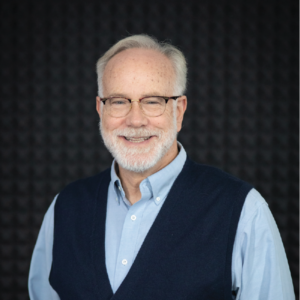
Mark D. Roberts
Senior Fellow
Dr. Mark D. Roberts is a Senior Fellow for Fuller’s Max De Pree Center for Leadership, where he focuses on the spiritual development and thriving of leaders. He is the principal writer of the daily devotional, Life for Leaders, and t...