


Third Third, Fourth Age, and Lent
The Beginning of Our “Third Third” Work
In 2015, when I began as Executive Director of Fuller’s Max De Pree Center for Leadership, I started hearing from mature leaders a desire to figure out life and leadership beyond retirement. They hoped the De Pree Center might help them discover how to live with meaning and impact after they left full-time work.
So, in 2017, I gathered a small group of trusted advisors to brainstorm how the De Pree Center might serve leaders as they approached and experienced retirement. In preparation for that gathering, I read a fine book called The Third Third of Life: Preparing for Your Future. It was written by Walter C. Wright, who had been the Executive Director of the De Pree Center when the book was published in 2012. This book was a helpful introduction to life and leadership for those in what Walt called the “third third” of life.
Before reading Walt’s book, I had not been familiar with the phrase “third third” as a description of later life. But I found it both intriguing and helpful. I liked the fact that “third third” didn’t specify precisely the age at which we begin this season, acknowledging that people experience aging differently. Moreover, “third third” didn’t assume one particular narrative for this time of life. Thus, I found it better than “retirement,” which would not be relevant to all older adults, such as the growing number of people who plan never to retire or those who haven’t worked in a job from which one retires. I also noted that people easily got the sense of “third third,” that it’s the season of life that comes after the typical activities of the second third of life, activities such as working, parenting, leading, etc. So, I followed Walt’s example by adopting “third third” as the De Pree Center’s way of speaking of what others might call older adulthood, retirement, the golden years, or encore. (Walt graciously allowed us to use his “third third” language.)
A Problem with Third Third
Though I’ve found third third language to be most helpful, at times I have sensed a problem with this perspective. The problem has to do with the vast diversity of third third life. People in this season of life reflect all the usual diversities, such as race, ethnicity, gender, geography, religion, class, marital status, education, politics, and so forth. But older adults also experience a wide range of diversities that are more pronounced in later life, diversities related to physical health, mental capability, financial security, work, retirement, marriage, widowhood, living situation, etc. Thus, the American Society on Aging rightly concludes, “Older people are the most diverse segment of our population.”
Consider, for example, two of my friends. Bill was a brilliant lawyer who began to struggle with Alzheimer’s disease in his early seventies. During his eighties, while living in a memory care facility, Bill did not recognize his wife or children. By way of contrast, my friend Jean recently finished serving as a caregiver for a friend. Mentally sharp and physically active, Jean is looking for a new purpose to guide her life of service to others. Jean, by the way, is 93 years old. The contrast between the lives of Bill and Jean offers one example among thousands in which people experience the third third of life quite differently.
Introducing the Young-Old and Old-Old
Many of these differences can be roughly correlated with chronological age. Though people age in different ways, in general, those in their early third third years are healthier and more mentally fit than those in their late 80s and above. (Of course, Jean is one of many exceptions.) For example, the Alzheimer’s Association, in 2025 Alzheimer’s Disease Facts and Figures, reported that whereas 5.1% of people 65-74 have “Alzheimer’s dementia,” 33.4% of adults 85 and over have the disease. Notice, however, that two-thirds of people over 85 do not have Alzheimer’s. Nevertheless, older adults usually experience both physical and mental decline in their eighties and beyond.
The age-related diversity of older adulthood led Bernice Neugarten, a highly respected gerontologist, to contend that it was no longer accurate to think of old age as a single period of life, something previously assumed by scholars and popular culture. Rather, in her influential 1974 article, “Age Groups in American Society and the Rise of the Young-Old,” Neugarten proposed a division between the “young-old” and the “old-old.” The young-old, who fall in the 55-74 age bracket, “are markedly different from the outmoded stereotypes of old age.” They are “relatively healthy, relatively affluent, relatively free from traditional responsibilities of work and family.” The old-old, usually 75 years of age and up, will eventually face the challenges of “slowing physical and mental deterioration,” a greater “probability of illness,” and the need for special care. Unlike independent young-old folk, the old-old are often dependent on others for their daily welfare. Thus, if we envision a monolithic third third of life, we can overlook the widely varied experiences of the young-old and the old-old. (Today, many gerontologists speak of young-old, old-old, and oldest-old, those who are 85 and over.)
Thus, if we envision a monolithic third third of life, we can overlook the widely varied experiences of the young-old and the old-old.
Introducing the Third and Fourth Ages
Several years after Neugarten introduced the distinction between young-old and old-old, another influential gerontologist, Peter Laslett, proposed an analogous approach to aging. In his 1989 book, A Fresh Map of Life: The Emergence of the Third Age, he rejected the common division of life into three stages: childhood, adulthood, and old age, sometimes referred to as youth, maturity, and decline. Instead, Laslett divided life into four ages:
First comes an era of dependence, socialization, immaturity and education; second an era of independence, maturity, and responsibility, of earning and of saving; third an era of personal fulfillment; and fourth an era of final dependence, decrepitude, and death (p. 4).
The Fourth Age represents what people used to call “old age.” The Third Age is something new. It has been made possible by the increase in public health and longevity in recent years. Today, as we move out of midlife, we can expect to experience the Third Age, an age beyond the season of ordinary work and child-rearing, an “age of personal achievement and fulfillment” (p. 4).
Neither Laslett nor Neugarten had anything to say directly about a third third perspective. Yet their efforts caution us not to assume that all third thirders are experiencing the same things in life. In the third third demographic, we have people who are young-old and old-old, Third Age and Fourth Age.
Focusing on the Young-Old and Third Age
My third third work, as part of the De Pree Center, has focused mainly on the people Neugarten would call young-old or those who represent Laslett’s Third Age. This is not because I want to ignore old-old or Fourth Age folks, however. In fact, the De Pree Center has been pleased to publish the excellent writings of Alice Fryling, who offers much wisdom for the latter years of the third third. But I have been focusing on the earlier third third experience for several reasons. First, I am responding to the current needs of the leaders served by the De Pree Center, most of whom are Third Age or younger. In time, of course, they’ll enter the Fourth Age. Moreover, there is a great need to address the potential for people to flourish in the Third Age. So many young-old people do not have a clear idea of how to live with purpose beyond the season of full-time work and child-rearing. Thus, it has seemed best to me to start our third third work by focusing on the Third Age.
Yet I am convinced of the great need and golden opportunity for work serving people in the latter years of the third third. There is much to be done for Fourth Age folks, the old-old and oldest-old. I am thankful for those who are already faithfully writing about the Fourth Age, from whom I have learned a lot. These thought leaders include Alice Fryling, Ronald Rolheiser, J.I. Packer, Henri Nouwen, and Elizabeth Nielsen. (I’m grateful to Elizabeth for a workshop she led recently that inspired my thinking for this article.)
Yet I am convinced of the great need and golden opportunity for work serving people in the latter years of the third third.
The Fourth Age and Lent
If you’re not yet in the Fourth Age, if being old-old is still a way off for you, you might be tempted to delay dealing with your mortality. After all, which of us wants to think about the losses of old age, including the ultimate loss of mortal life? I’m reminded of something that happened to my friend Tim. As a restaurant manager, he hired a young man for his first full-time position. Tim explained to his new hire the benefits that came with the job, including life insurance. The young man was unfamiliar with life insurance. So, Tim said that if this man were to die, his family would receive money to help them live. The new employee seemed upset by this idea. He didn’t want the life insurance. “Tim,” he said earnestly, “I don’t want to die.”
We laugh at this story, but see ourselves in it. The young man put into words what most of us feel but don’t express. We hesitate to face our own mortality or that of others. As Elizabeth Nielsen observes in her doctoral dissertation, Beloved Elder: The Spiritual Journey of Aging,
It has become impolite [in the U.S.] to discuss death. Reminding people of their mortality is rude. Death has been hidden from view in hospitals and retirement facilities, instead of near at hand in homes, and has taken on shame. The common acceptance of mortality and the communal involvement in death, as well as the sense of its spiritual meaning, have disappeared (p. 32).
Nielsen is right when we look at our culture with its anti-aging strategies, cosmetic surgeries, and avoidance of death. Even the church often dodges the subject.
But then there’s Lent. Lent, with its invitation to pay attention to our mortality, our sinfulness, and our need for a Savior. Lent, a season in the Christian year during which we recognize our dependence on God, even if we prize our independence in the rest of the year.
Lent, a season in the Christian year during which we recognize our dependence on God, even if we prize our independence in the rest of the year.
The invitation of Lent to acknowledge our mortality comes right at the start. Lent begins with Ash Wednesday, one of the bluntest and boldest reminders in today’s world of our mortality. On Ash Wednesday, we are told that we have come from dust and to dust we shall return (Gen 3:19). We have ashes placed on our foreheads as a tangible sign of our dusty mortality, yet in the shape of a cross that points to our Savior. Lent begins with the fact that we will die. In a literal sense, Lent puts your mortality “in your face.”
As a pastor, I’ve had the opportunity to “impose” ashes on the foreheads of hundreds of people. I’ve put ashes on the heads of tiny babies, hip teenagers, young parents, thriving grandparents, and folks who are among the oldest-old. All of these have been reminded of their mortality by the ashes on their foreheads and by my words, “You have come from dust. To dust you shall return.”
People experience the imposition of ashes in different ways. But from conversations I’ve had with folks in the Fourth Age, I know that the reminder of their morality resonates deeply. In part, it does this because our mortality makes itself known through our aging bodies. When our bodies aren’t as strong and quick as they once were, we feel our mortality. When our knees and hips fail us, our hearts “attack,” our organs get cancer, our skin wrinkles, our hair turns gray (if we have any left), our vision fades, or we become hard of hearing, we know our time in this age is limited. (If you need additional reminding, check out Ecclesiastes 12:1-8.)
Though the season of Lent doesn’t focus exclusively on the “you are mortal” message of Ash Wednesday, it does invite us into a time of reflection upon our humanness, sinfulness, and neediness. Lent helps us realize just how much we need a Savior.
Lent for All Ages
Lent is certainly a time for people in the Fourth Age to face their mortality honestly and faithfully. But Lent isn’t just for the old-old. It’s a season for all of us to acknowledge our mortality and dependence upon the Lord. It’s a time for unusual honesty about life and death.
But Lent isn’t just for the old-old. It’s a season for all of us to acknowledge our mortality and dependence upon the Lord. It’s a time for unusual honesty about life and death.
Lent begins with death, the hard truth of ashes to ashes, dust to dust. Lent also ends with death, the wonderful truth of Christ crucified “for us and our salvation.” The second-to-last day of Lent is Good Friday, the day when Jesus died on the cross. The last day of Lent, Holy Saturday, is a time to reflect further upon the meaning of his death. Once again in Lent, we are confronted by mortality, the mortality of the crucified Jesus who died so that our mortal bodies might put on immortality (1 Cor 15:53-54).
But Lent is not the end of the story, thanks be to God. Rather, it prepares us for the first day after Lent, for Easter Sunday, the day on which we renew our celebration of the victory of God over death through the death and resurrection of Jesus. Lent, beginning on Ash Wednesday, reminds us of the fact that our bodies are mortal and perishable. But the resurrection of Jesus reframes this reality. As it says in 1 Corinthians 15:53-57:
For this perishable body must put on imperishability, and this mortal body must put on immortality. When this perishable body puts on imperishability, and this mortal body puts on immortality, then the saying that is written will be fulfilled:
“Death has been swallowed up in victory.”
“Where, O death, is your victory?
Where, O death, is your sting?”
The sting of death is sin, and the power of sin is the law. But thanks be to God, who gives us the victory through our Lord Jesus Christ.
Beyond old-old, there is the new-new of resurrection life in Christ. Beyond the Fourth Age is the Fifth Age, the age to come.
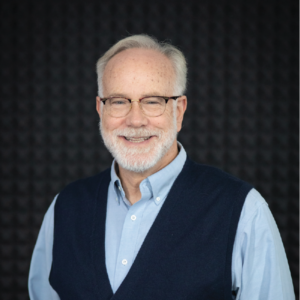
Mark D. Roberts
Senior Fellow
Dr. Mark D. Roberts is a Senior Fellow for Fuller’s Max De Pree Center for Leadership, where he focuses on the spiritual development and thriving of leaders. He is the principal writer of the daily devotional, Life for Leaders, and t...